News & Insights

Neighborhood change doesn’t happen in headlines—it happens block by block, relationship by relationship. Here, we share the stories, insights, and real-world examples behind CFN’s work, highlighting what it takes to build lasting neighborhood power. Each post is a window into how communities move from idea to impact. Explore our stories and if you see yourself in this work, connect with us to be part of building what comes next.

By Center For Neighborhoods • September 30, 2026
Start with Neighbors, then Follow their lead  Yesterday, Mayor Craig Greenberg stood in Russell and announced 25 new permanently affordable homes on Elliott Avenue. In that presentation, there was one thing not apparent: Russell: A Place of Promise, the neighborhood's community land trust, is leading the project. Its partners include The Housing Partnership, Inc., Louisville Metro Government, which is investing $1.45 million, and the Louisville Affordable Housing Trust Fund, which is adding $1 million. The homes are the part people will see. The part that made them possible started years ago, on front porches, when organizers knocked on doors and asked Russell residents what they wanted for their neighborhood. Then they kept listening, and eventually they handed residents the keys to the process itself. The most important asset is already there Asset Based Community Development starts from a simple idea: the people who live in a neighborhood are its foundation. Residents know which blocks are changing, which elders everyone trusts, and what a new development will mean for the family next door. No consultant can bring that knowledge in from outside. Russell has plenty to build on. It was once a hub of Black-owned businesses that created jobs and a center of Black homeownership. It is also a neighborhood that lived through redlining and urban renewal, and through decades of plans made about Black residents instead of with them. A resident-first approach takes both parts of that history seriously. How Russell did it Two leaders have carried this work from the start. Cassandra Webb and Theresa Zawacki, RPOP's Interim Co-Executive Directors, have led the initiative since its beginning, bringing backgrounds in community organizing and urban planning. That pairing matters. Organizing and planning worked side by side from the first day, instead of planning going first and outreach coming later. Webb has explained that the team chose from the beginning to invest in people first, because community development too often treats people as an afterthought. Zawacki has described the work as building shared decision-making and shared learning with Russell residents. The early work was slow and personal. Since 2018, RPOP has canvassed the neighborhood, held events large and small, and set up neighborhood pop-ups with resources. Those conversations grew into organized groups of residents. In 2020, the Russell for Russell Resident Coalition brought together 26 Black Russell residents between the ages of 22 and 72, and their work produced the Russell Partnership Pledge, a set of shared values that still guides RPOP. Residents didn't only give feedback on someone else's plan. RPOP's structure as a nonprofit community land trust, and its founding board members, came out of a multi-year shared learning process in which Russell residents worked with RPOP to define the organization's future. Today RPOP's board is made up mostly of community members who take part directly in land use planning. A community land trust works like this: residents buy the house while the land stays in trust, which lowers the cost of owning a home and caps resale prices so the home stays affordable for the next family. Residents picked this tool because it answers the question they kept raising. How do we welcome investment without being pushed out by it? What a resident-first process asks of us Russell's path breaks down into four steps. Each one builds on the one before it, and none of them can be skipped. Step 1: Go find people where they are. A meeting notice on a website reaches the people who already come to meetings. Knocking on doors reaches everyone else. In Russell, this meant years of canvassing, pop-ups, and events before anyone talked about a plan. Step 2: Let residents set the priorities. Once people are at the table, ask what matters most to them, and accept the answer even when it differs from what the city or a funder expected. A plan built on residents' priorities is stronger because neighbors will defend it. Step 3: Hand over the lead. Input sessions ask residents what they think. A resident-led process asks residents to decide, then gives them seats on the board that carries out the decision. In Russell, that board is made up mostly of community members. Step 4: Plan for years, and budget for them. RPOP launched in 2018. The homes announced today are breaking ground in 2026. That time was work, not a delay, and funders and the city have to pay for it the same way they pay for construction. Metro already knows how to do this For city leaders, the best news in Russell's story is that Metro helped start it. RPOP launched in 2018 with incubation from Cities United and Louisville Metro Government, and fiscal sponsorship from the Community Foundation of Louisville. Fiscal sponsorship means an established nonprofit handles the money and paperwork so a new effort can get started before it has its own nonprofit status. Metro also lent its own people. Zawacki left her position as Senior Policy Advisor to Louisville Forward to serve as an Executive on Loan to the initiative during its early years. And Metro has committed land: the former American Cigar Company site at 30th and Madison is owned by Louisville Metro Government with a formal commitment to RPOP, and residents plan to make it a mixed commercial and residential campus. Staff time, patient support, public land, and trust in residents' decisions made today's announcement possible. None of those are unusual tools. Metro can offer them to other neighborhoods on purpose. The ask Before Metro funds the next neighborhood plan in Louisville, build the RPOP steps into the contract from the start. Pay for door knocking and years of organizing, not only the final document. Require that residents set the priorities and hold seats on whatever body carries the plan forward. And when public land is on the table, offer it first to the residents who wrote the plan. Russell's neighbors did the hard work of deciding what their neighborhood needs. Twenty-five families on Elliott Avenue will soon live in the result.

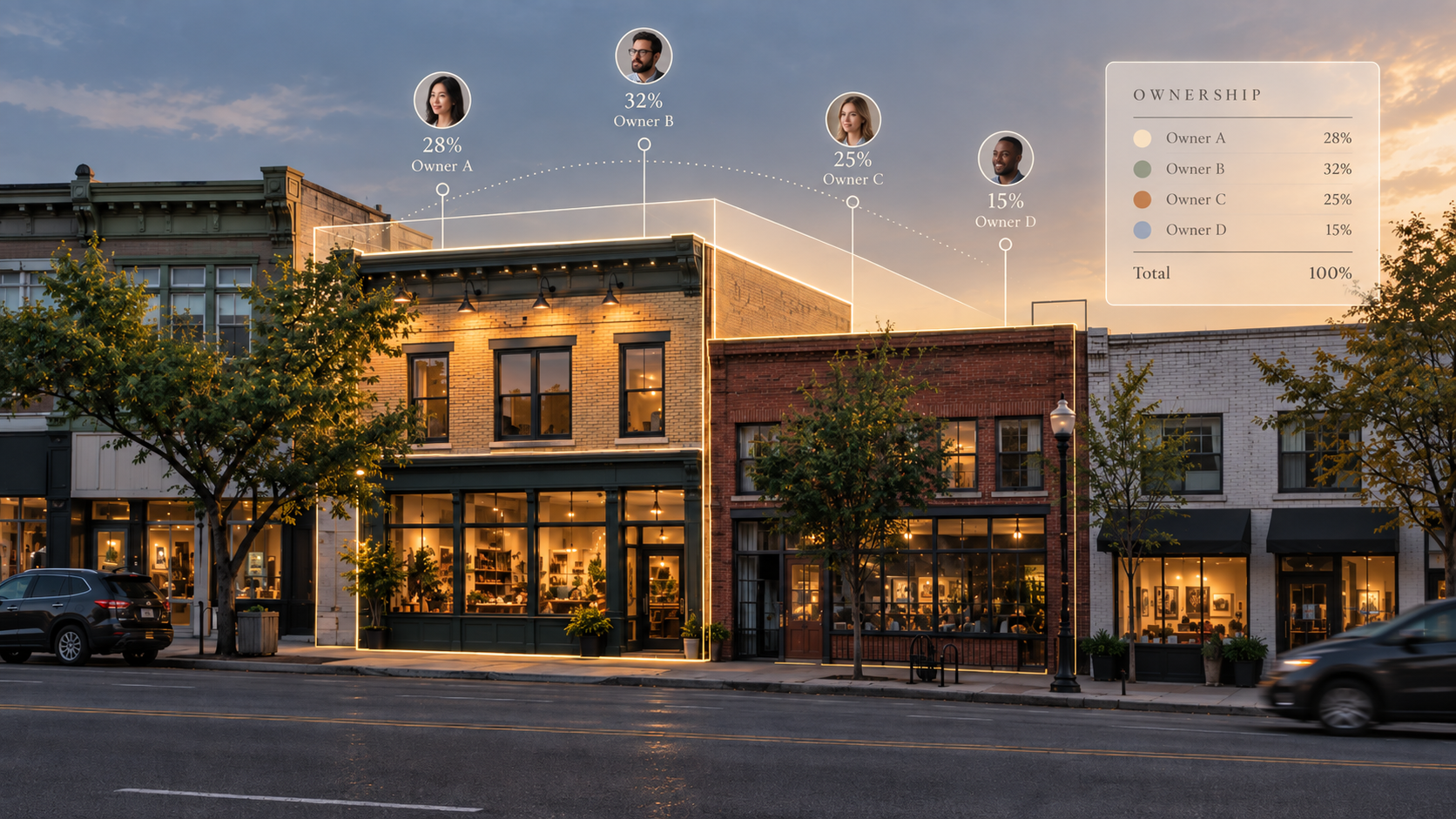
Modern storefronts at dusk with lit windows, trees, parked cars, and floating profile icons over the street.
By Center For Neighborhoods • September 28, 2026
How much of the commercial property in a neighborhood is owned by the people who live around it, and how much wealth has that ownership built for them? No one can answer. There is no registry, no reporting standard and no annual number. Capital allocates to what it can see, and this category is nearly invisible.
By Center For Neighborhoods • September 24, 2026
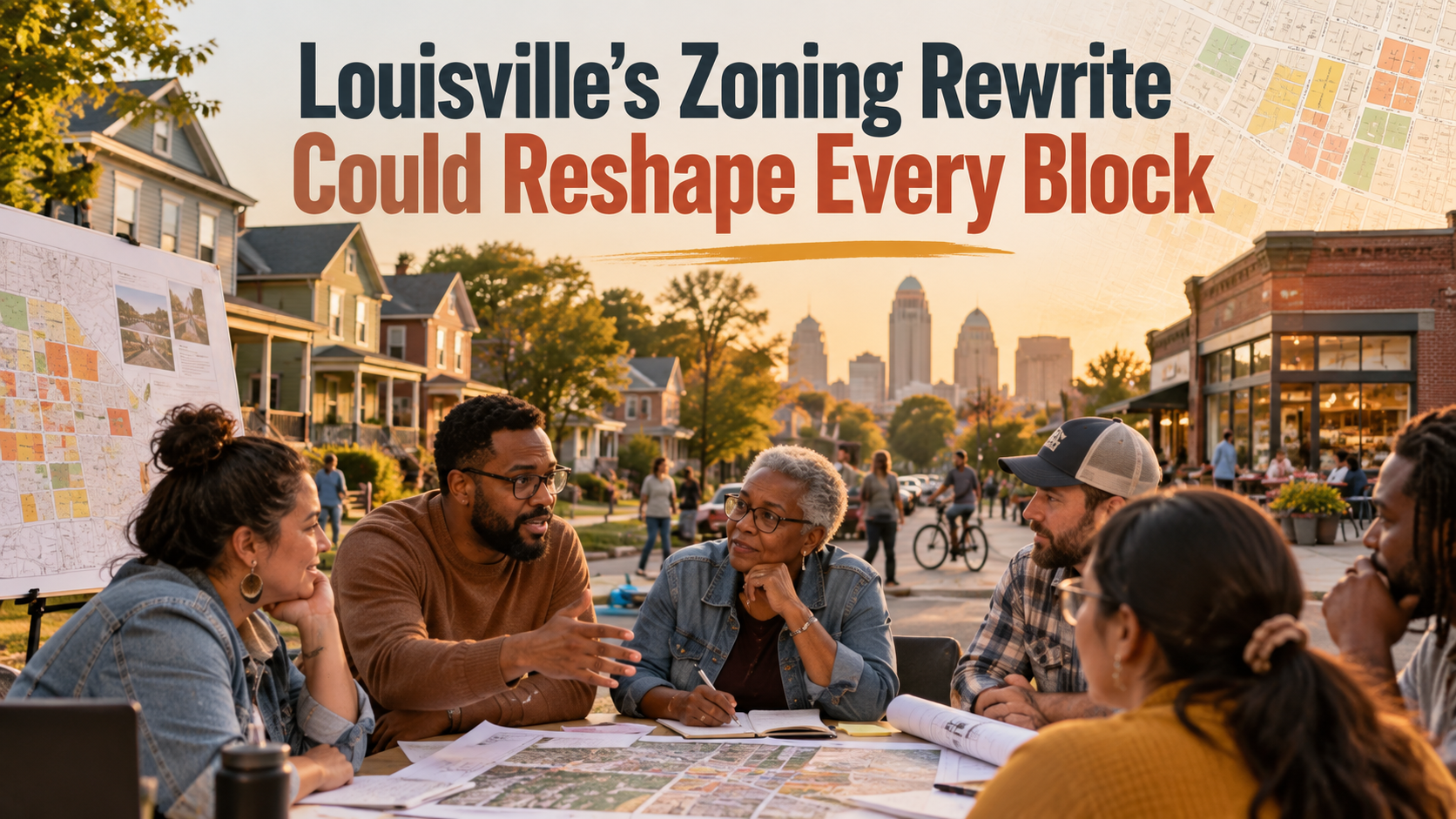
If you followed this year's fight over data centers in Jefferson County, you've already seen the Land Development Code at work. The packed public hearings, proposed setbacks from homes and schools, and Planning Commission's 5-3 vote in September all came down to rules about what gets built where. The same code that determines how close a 500,000-square-foot server farm can sit to a house also decides whether your street can have a duplex, a corner store, or a sidewalk that leads somewhere. Louisville is now rewriting that code in full for the first time since 2003. The Land Development Code puts the city's comprehensive plan, Plan 2040, into practice. It defines single-family and duplex lots, determines which businesses can open on commercial corridors, and sets rules for subdivision plats, signs, landscaping, and connections to transit. It applies to every neighborhood in Jefferson County outside the 12 independent cities. In 2020, Metro Council passed Resolution 82, directing the Office of Planning to recommend changes that would make development more equitable and inclusive. A HUD grant is funding the full rewrite. The goals are to bring the code up to date, make it easier for residents and applicants to navigate, and use language people can understand without a lawyer. In West and South Louisville, decades of disinvestment have left neighborhoods with walkable streets and small lots that could support duplexes and corner apartment buildings. But the code still limits most of those blocks to single-family homes. Neighbors can't legally rebuild the density that once existed there. The Highlands has nearly identical old streets and mostly allows that housing mix today, which helps explain why it looks the way it does. Farther out, in wealthier, less dense parts of the county, large-lot, single-family-only zoning continues to keep density and diverse neighbors out, just as it was designed to do almost a century ago. An equitable rewrite needs to address those restrictions along with the barriers in West and South Louisville. Neighborhoods that used zoning to stay closed off should be part of the change. For families, the rewrite could change the housing choices available on their block. Across much of the city, single-family-only zoning rules out duplexes, accessory units, and small apartment buildings that help keep neighborhoods affordable for multiple generations of the same family. Small businesses face their own barriers. Rigid commercial zoning can make it hard to open a corner store, restaurant, or home-based business on a street where neighbors already walk and want those services. The new rules will help determine what housing and businesses are possible in your neighborhood for years. CFN's Policy Hub explains how zoning works, what form districts are, and how a text amendment such as the data center rules moves through Metro Council. Its plain-language zoning and planning overview is one of the site's most-visited pages. The update runs through December 2028. Plans call for 12 public meetings in three rounds, with planning staff office hours after each round. There will also be six focus groups, including one for neighborhood organizations, and neighborhood walking tours. Before the first round of meetings, the Office of Planning is holding Community Dinner Conversations for neighborhoods that have historically been left out of planning discussions, including West and South Louisville. No meeting dates are posted yet. Sign up for project updates on Louisville Metro’s LDC Project website to be notified when public meetings and other engagement opportunities are announced. CivicPulse is presented by Center for Neighborhoods as part of our effort to use AI to help distill public information and make civic issues easier to follow. AI can make errors. Please let us know how we’re doing.
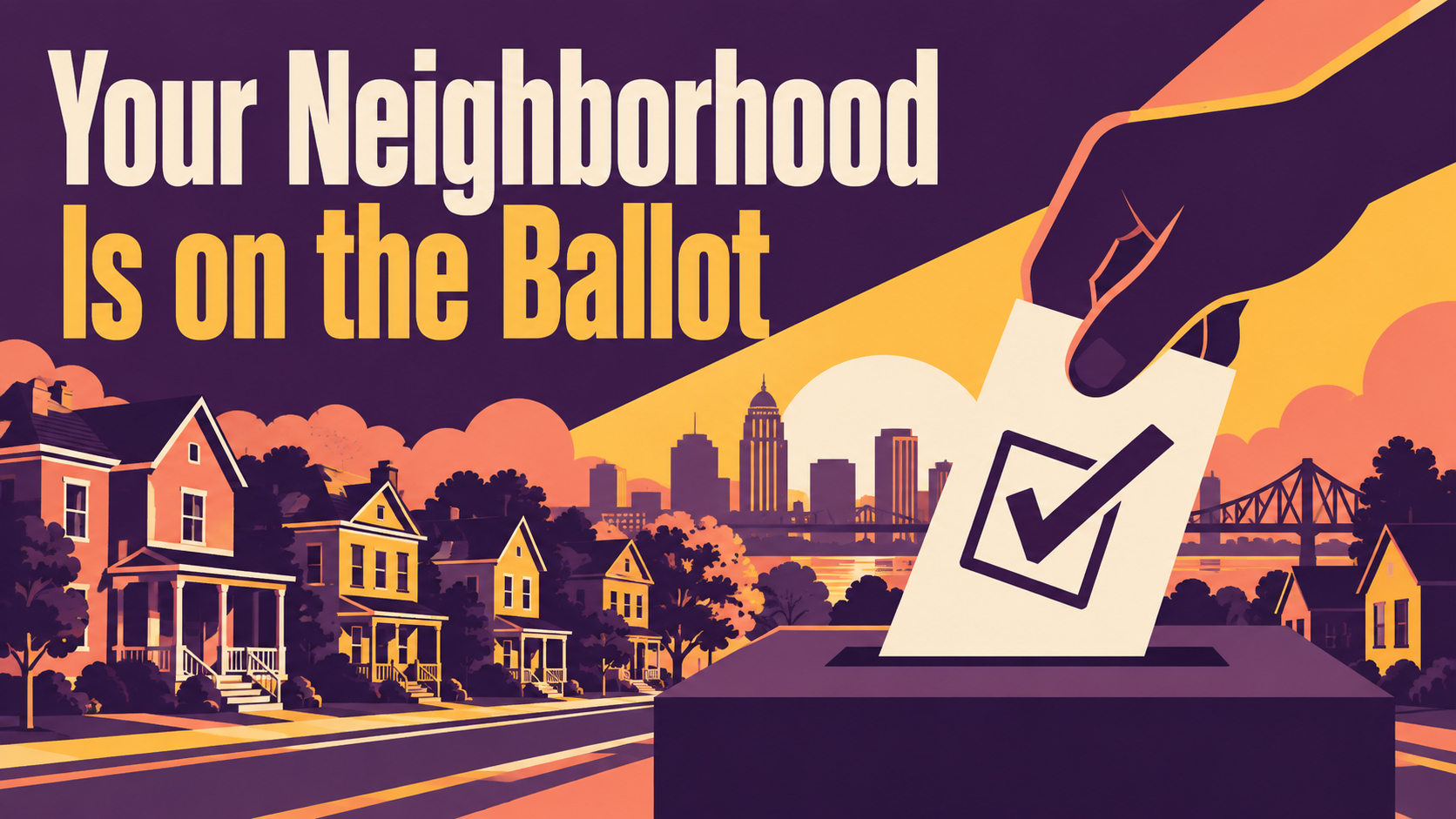
Neighborhood election poster with houses and a hand placing a ballot into a box at sunset
By Center For Neighborhoods • September 8, 2026
When a vote like HB 8 exempting companies from data center taxes comes up, the calculation is straightforward: the companies lobbying for the exemption are organized, present, and paying attention. Most residents are not. The bill passes.
By Center For Neighborhoods • August 26, 2026
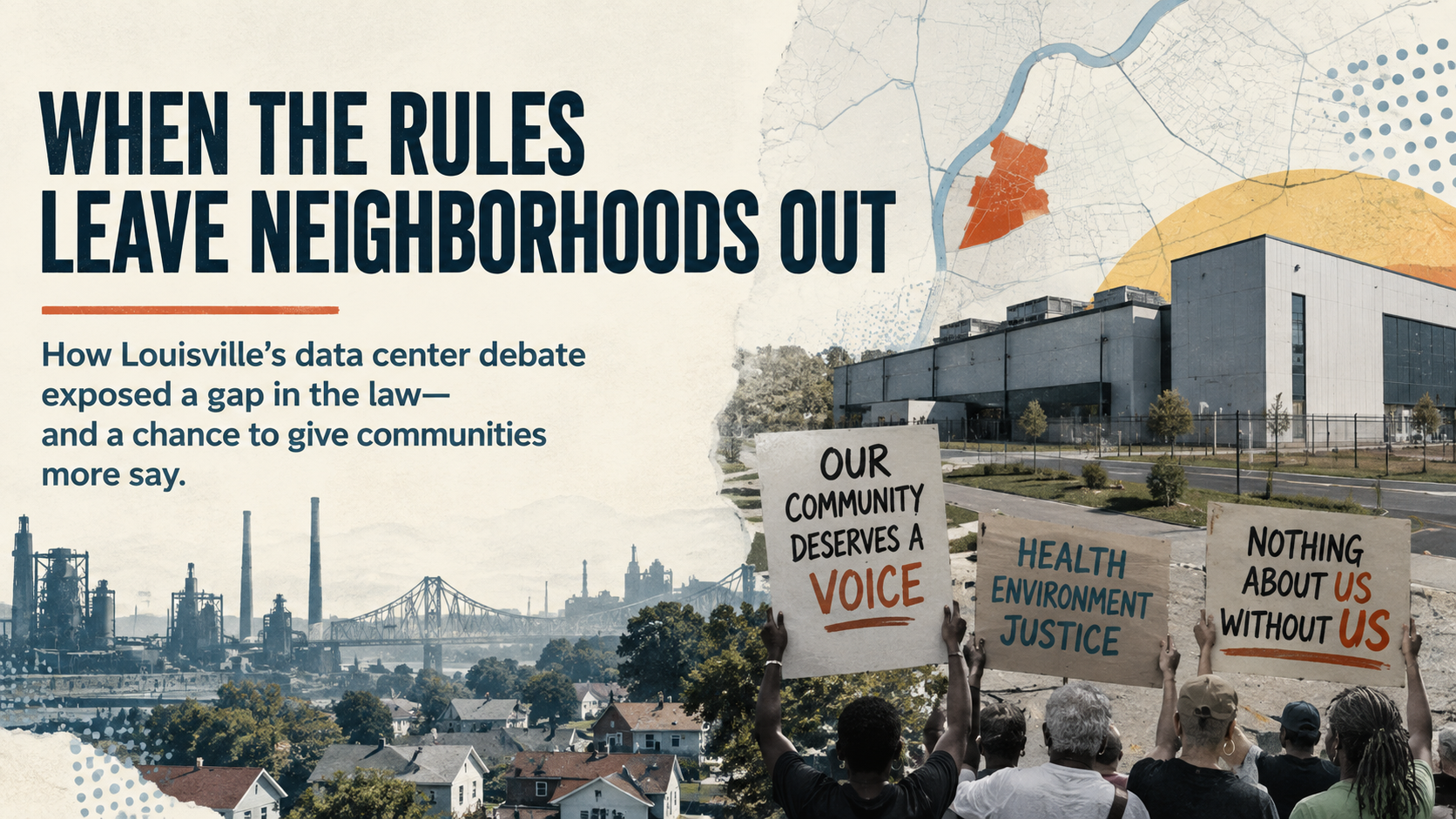
Louisville just hit pause on new data centers. But here’s the bigger question: what can happen before the public ever knows a project exists?
Protest scene with signs in a city, overlaid with headline “When the rules leave neighborhoods out”
By Center For Neighborhoods • August 19, 2026
CFN analyzed the proposed framework of the recent data center vote in Louisville so neighbors and neighborhood organizations have what they need to engage.
Laptop showing a colorful analytics dashboard with charts, metrics, and a purple gradient background
By Center For Neighborhoods • June 30, 2026
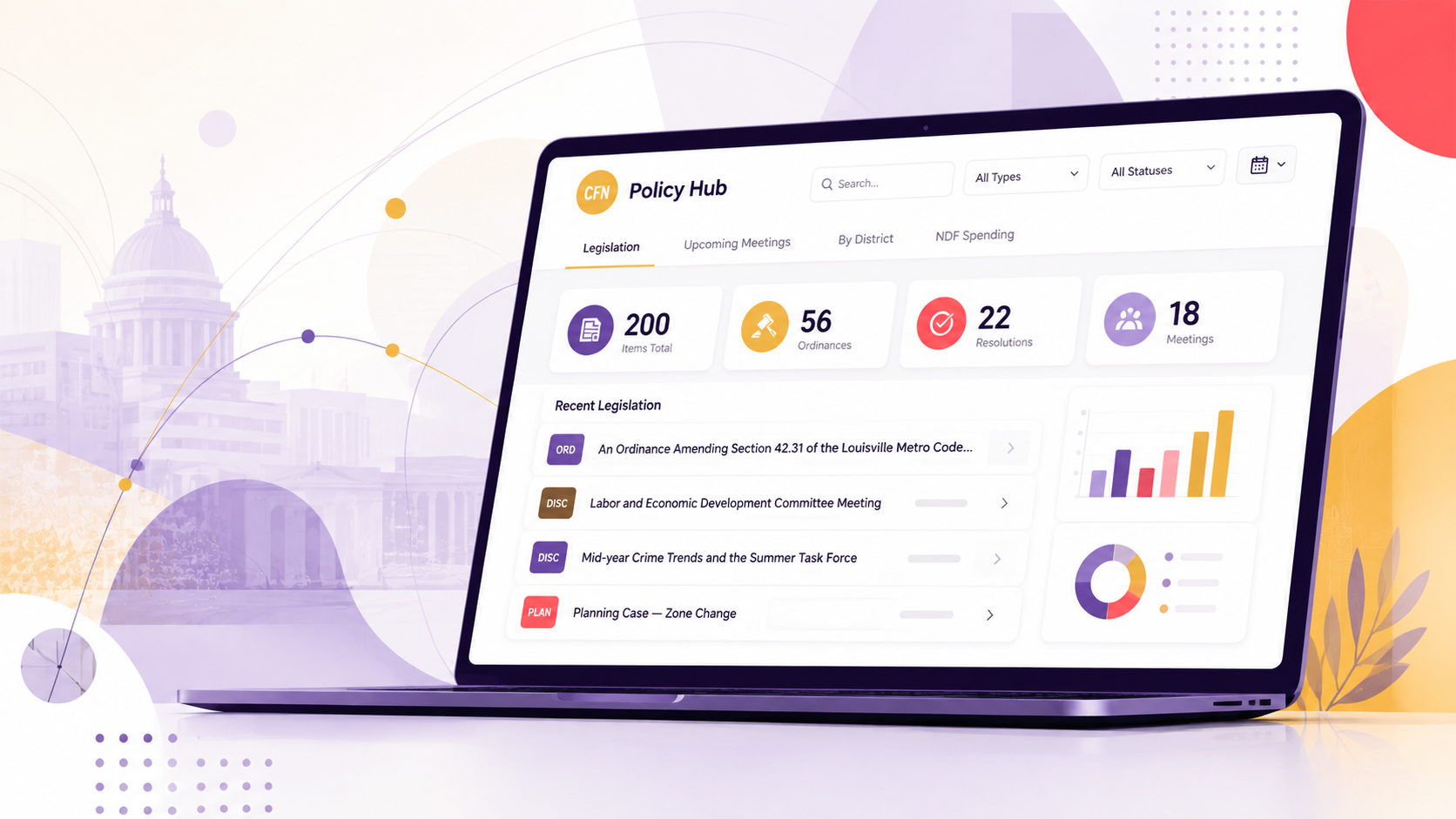
CivicPulse is a program of Center for Neighborhoods designed to track what Louisville Metro Council is doing — legislation, meetings, budget decisions, neighborhood funding, and the public choices that shape daily life — and make that information clear for the people whose lives it affects. Not insiders. Not lobbyists
“The Final Budget Moves” graphic with coins shifting from city buildings to homes and farms
By Center For Neighborhoods • June 24, 2026
Louisville Metro Council is finalizing its amendments to the Mayor’s proposed budget, one of the clearest moments all year to see how public dollars move and what those choices mean for neighborhoods.
Stylized city skyline with houses, bridge, and a large arrow pointing right over a purple-orange landscape
By Center For Neighborhoods • May 28, 2026
Louisville’s proposed budget includes $23.1 million in local housing investment but Louisville’s housing need is measured in the billions. Is it the best kind of investment and is it enough?
Crowd of protesters raising fists in a stylized urban scene with red and blue geometric blocks
By Center For Neighborhoods • May 20, 2026
Communities are often asked to dream, plan, attend meetings, share their history, lend credibility, and support redevelopment. But too often, when the value is finally created, ownership sits somewhere else. The Nia Center gives Louisville a chance to do something different.
Illustration of a civic balance scale with a town and cityscape, domed capitol, and text “Balance of Civic and Community Elements”
By Center For Neighborhoods • May 8, 2026
Budgets are not just spreadsheets. They are choices. And when we look at Louisville Metro’s budget trends over the last five years, one thing becomes clear: some parts of local government have grown significantly, while other departments tied directly to neighborhoods, housing, and planning have lost ground.
May is Budget Month poster with city hall and clipboard graphic; says council budget hearings are underway.
By Center For Neighborhoods • May 8, 2026
Louisville’s next city budget is now in the hands of Metro Council, and May is when the public review begins in earnest.
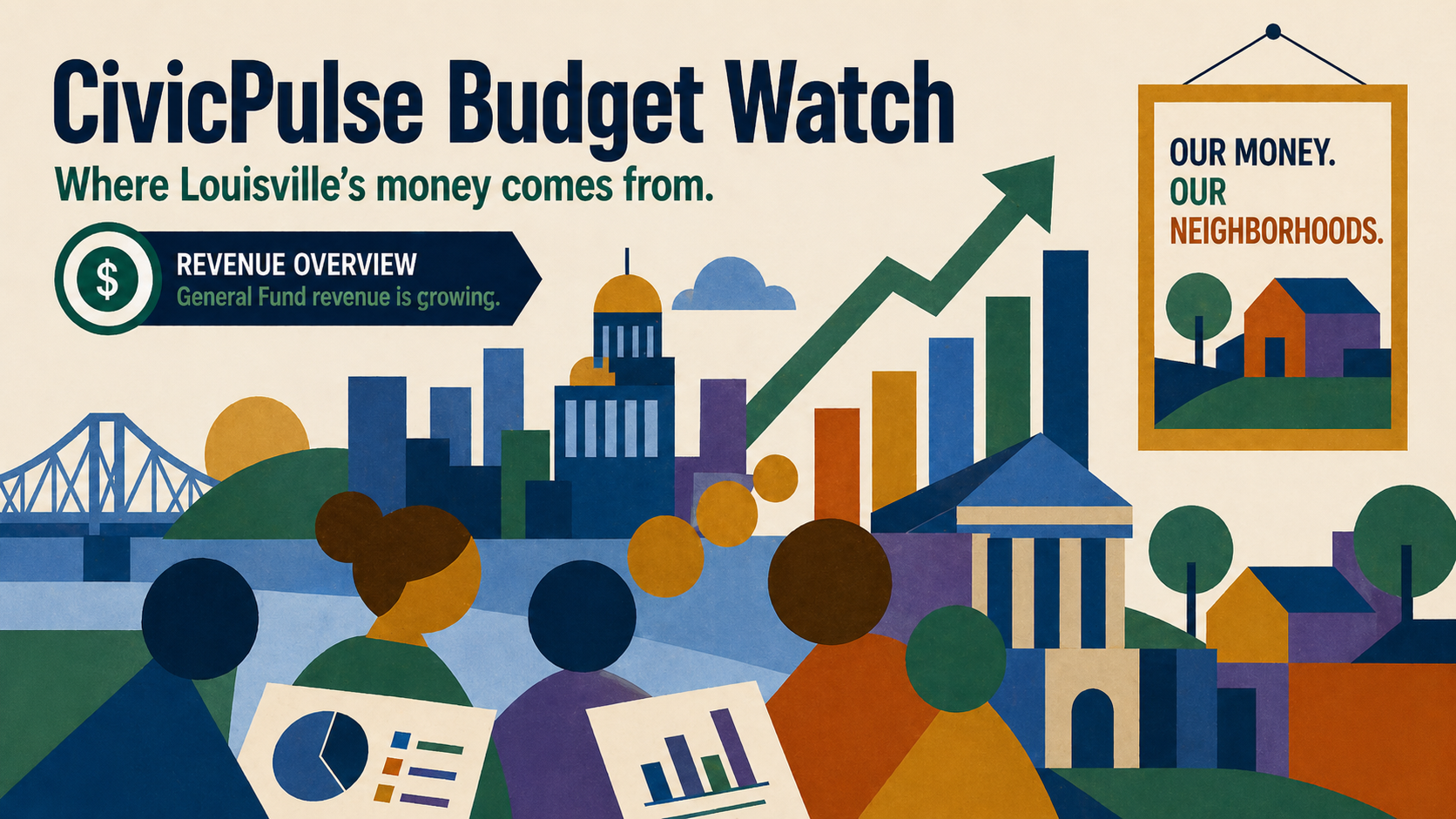
CivicPulse Budget Watch graphic with people, charts, city buildings, and rising arrows about community spending
By Center For Neighborhoods • April 30, 2026
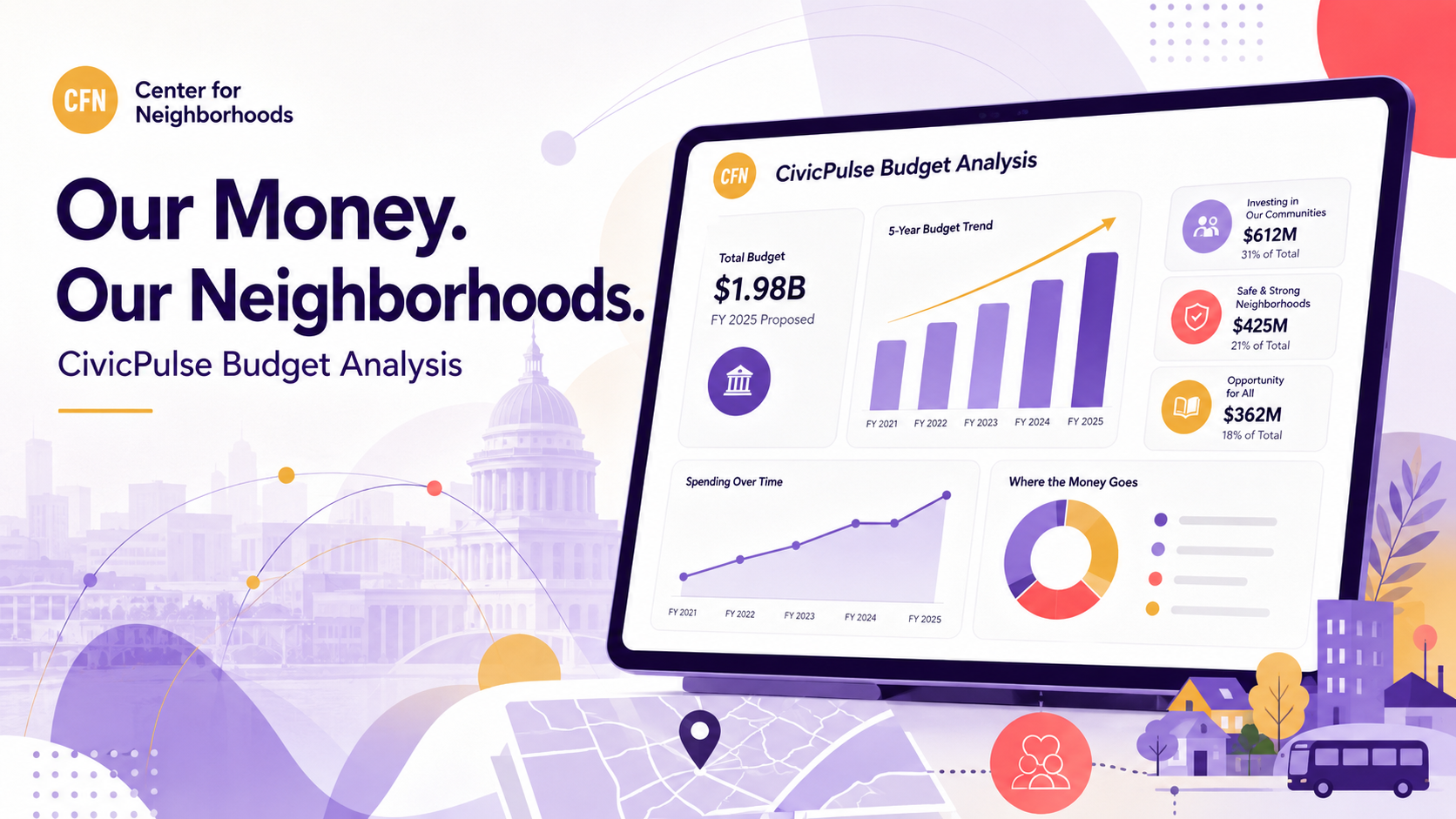
This week’s budget review starts with a simple but important fact: Louisville Metro is expecting more General Fund revenue this year — $919 million total, up $42.5 million from last year. Before residents can weigh in on what the budget should fund, we need to understand where the money is coming from.
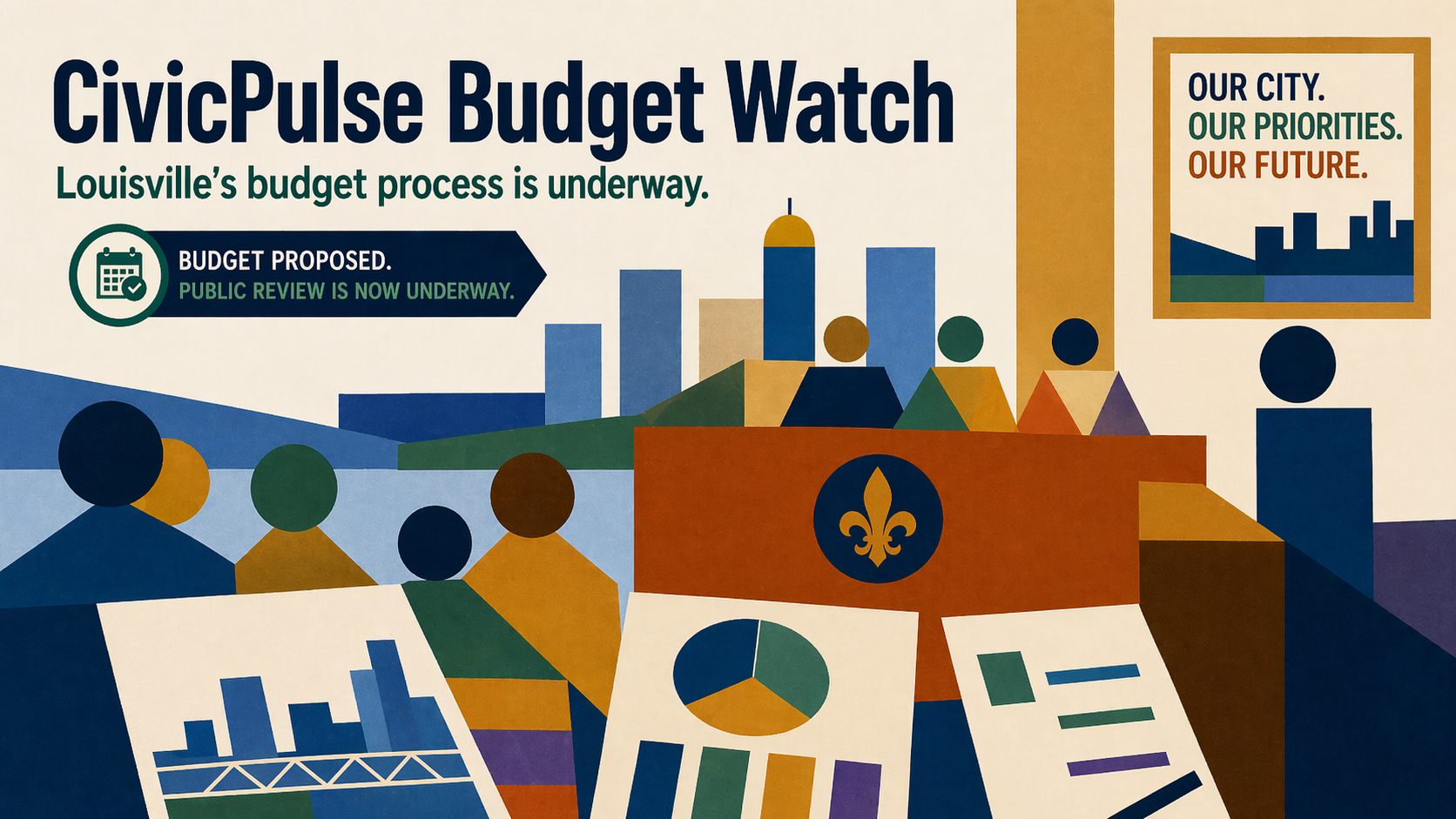
CivicPulse Budget Watch meeting on Louisville’s budget process, with officials, charts, and a city skyline backdrop
By Center For Neighborhoods • April 24, 2026
Over the next several weeks, Metro Council will review the Mayor’s proposal, hear from departments, ask questions, consider amendments, and adopt a final budget before the end of June. This is one of the most important civic processes of the year because the budget is where public priorities become real — or do not.
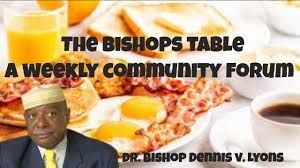
A man in a suit and hat alongside breakfast food with text:
By Center For Neighborhoods • April 16, 2026
Thanking Rev Bishop Lyons and his colleagues for creating a space where neighborhood voices matter, where important information can be shared openly, and where people from across Louisville can come together to listen, learn, and stay connected to what is happening in the community.
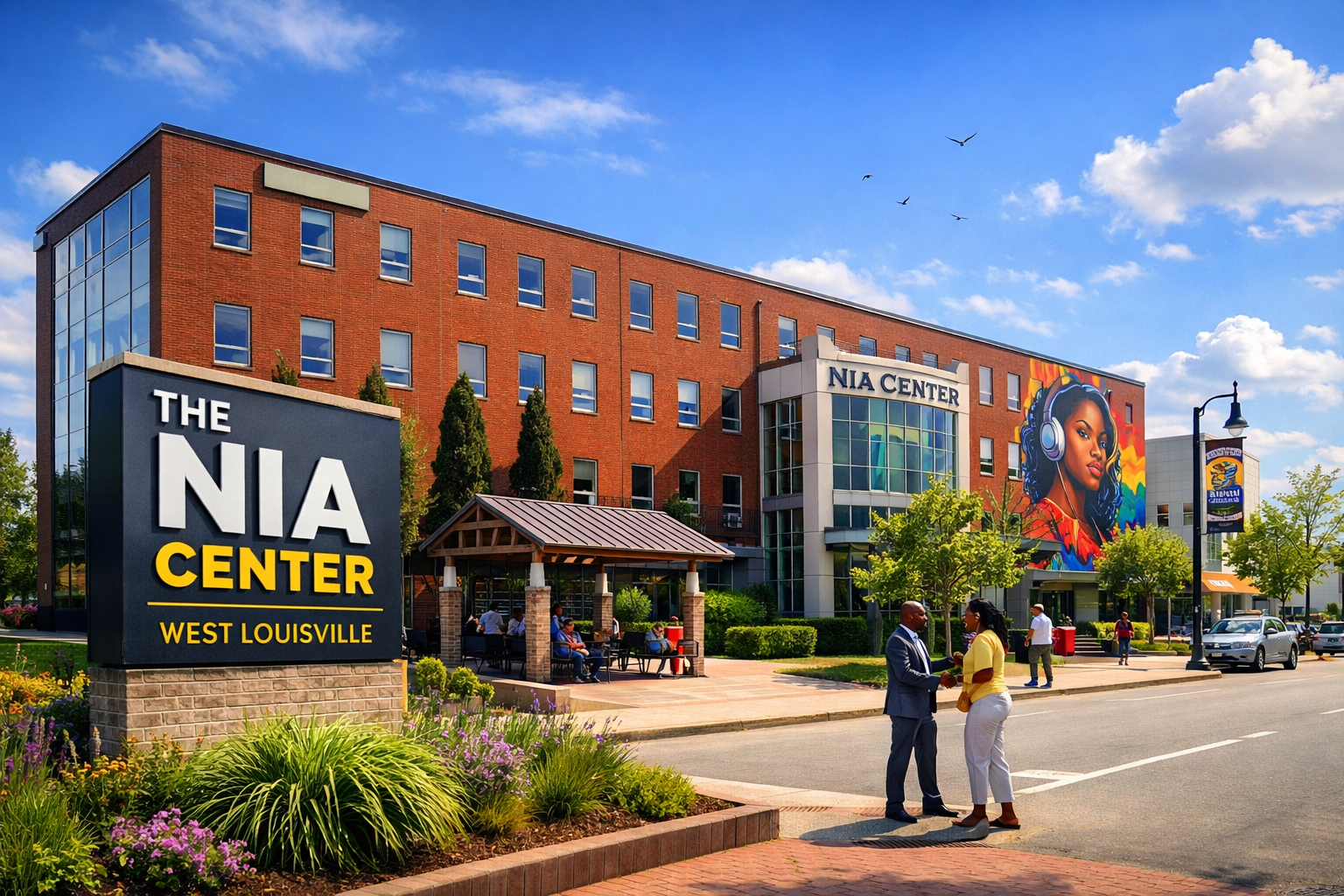
The Nia Center building in West Louisville features a red brick facade, a vibrant mural, and a prominent black sign out front.
By Center Forneighborhoods • March 8, 2026
Learn how the Nia Center is becoming a permanent hub for community ownership. Support local businesses & organizations for lasting change.
A large ornate bronze fountain with water cascading into a pool, surrounded by a wrought-iron fence and greenery.
By Center for Neighborhoods • March 2, 2026
CFN has evolved from a design center doing primarily human-centered architecture work into an organization focused on education, engagement, and resident leadership—training and programs that help neighbors define priorities and build power together.
Woman in blazer at a desk, writing in a notebook, with laptop, blueprints, and phone; office setting.
By Center for Neighborhoods • February 21, 2026
Louisville doesn’t need more ideas. It needs more capacity to execute—in neighborhoods, with residents, and in ways that actually last. That’s why Center for Neighborhoods is building a citywide Expert Network of experienced planners, facilitators, designers, organizers, analysts, developers, and project leaders.
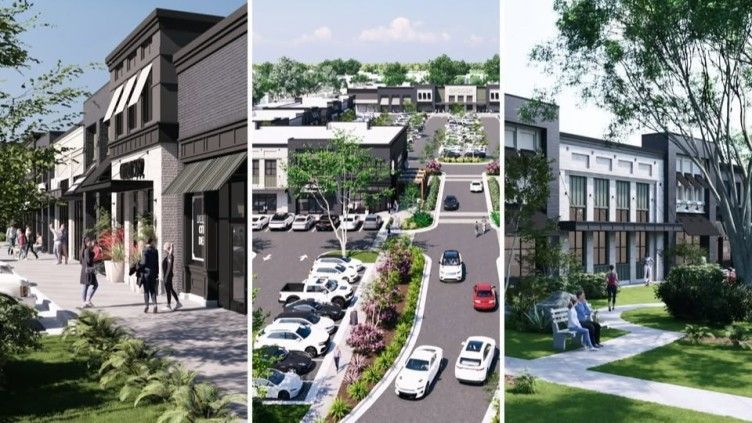
Three architectural renderings of a retail and residential development with people, cars, trees, and greenery.
By Center for Neighborhoods • February 19, 2026
This post is part of CFN’s Project78 series—spotlighting what’s happening in neighborhoods across Louisville through the lens of experienced, concerned local experts and partners who help communities stay informed and ready to engage.
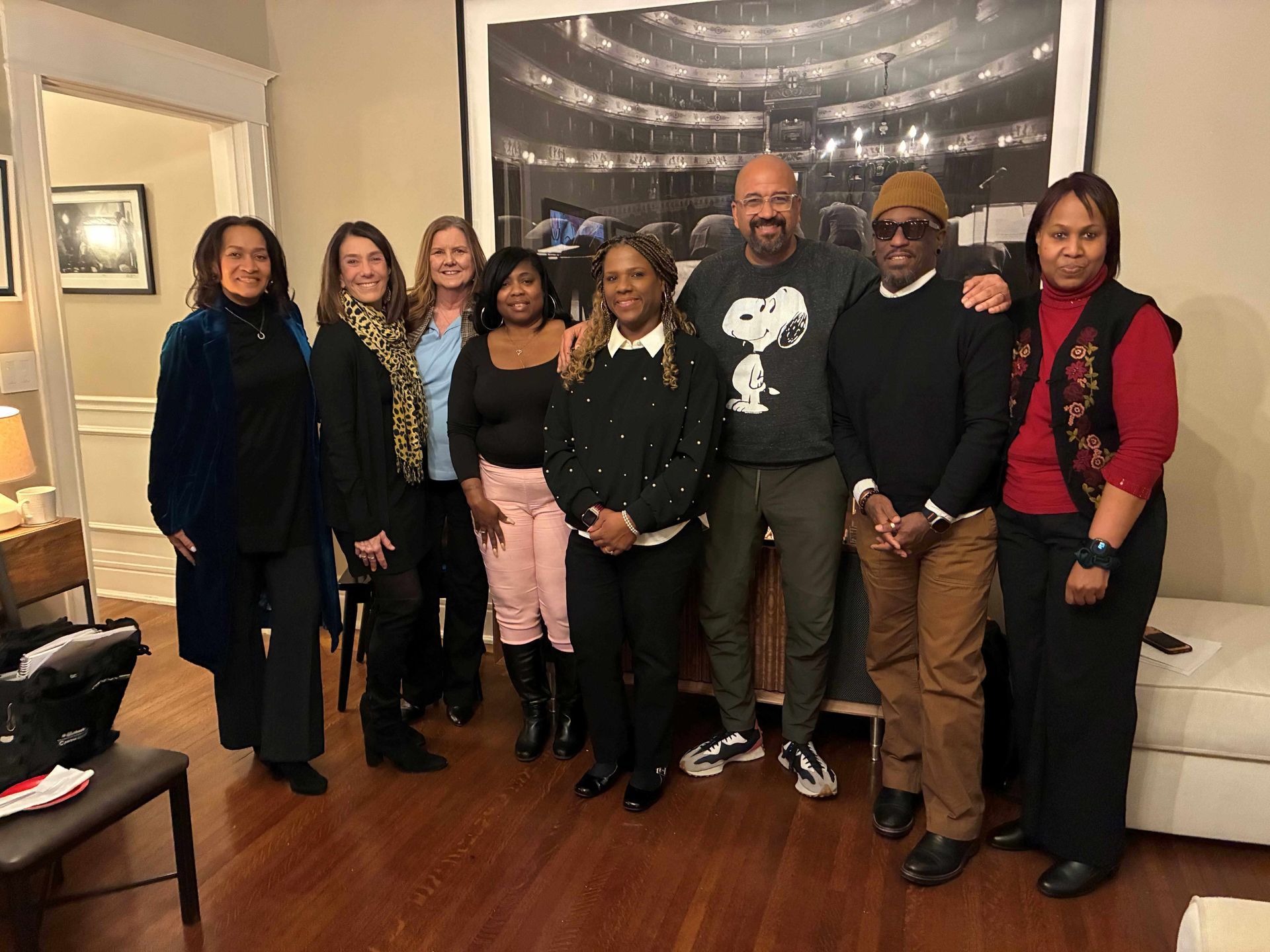
Group of people posing together in a room with a large photo on the wall.
By Center for Neighborhoods • December 26, 2025
CFN issues its FY2025 Impact Report
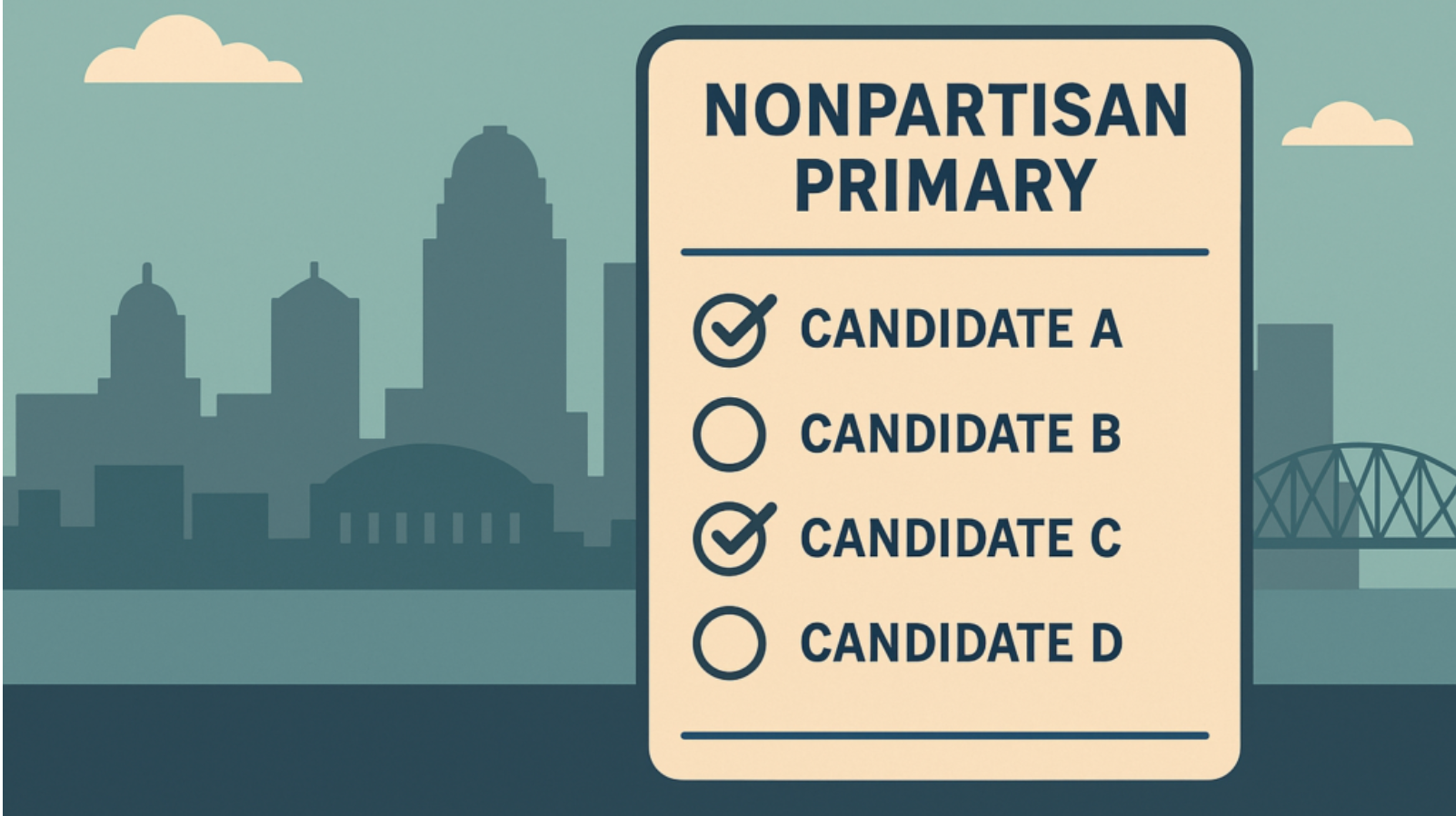
Nonpartisan primary ballot with votes marked for Candidates A and C, with a city skyline backdrop.
By Center for Neighborhoods • October 29, 2025
Louisville Is Moving to Nonpartisan Local Elections. Here’s What It Means for Neighborhoods.
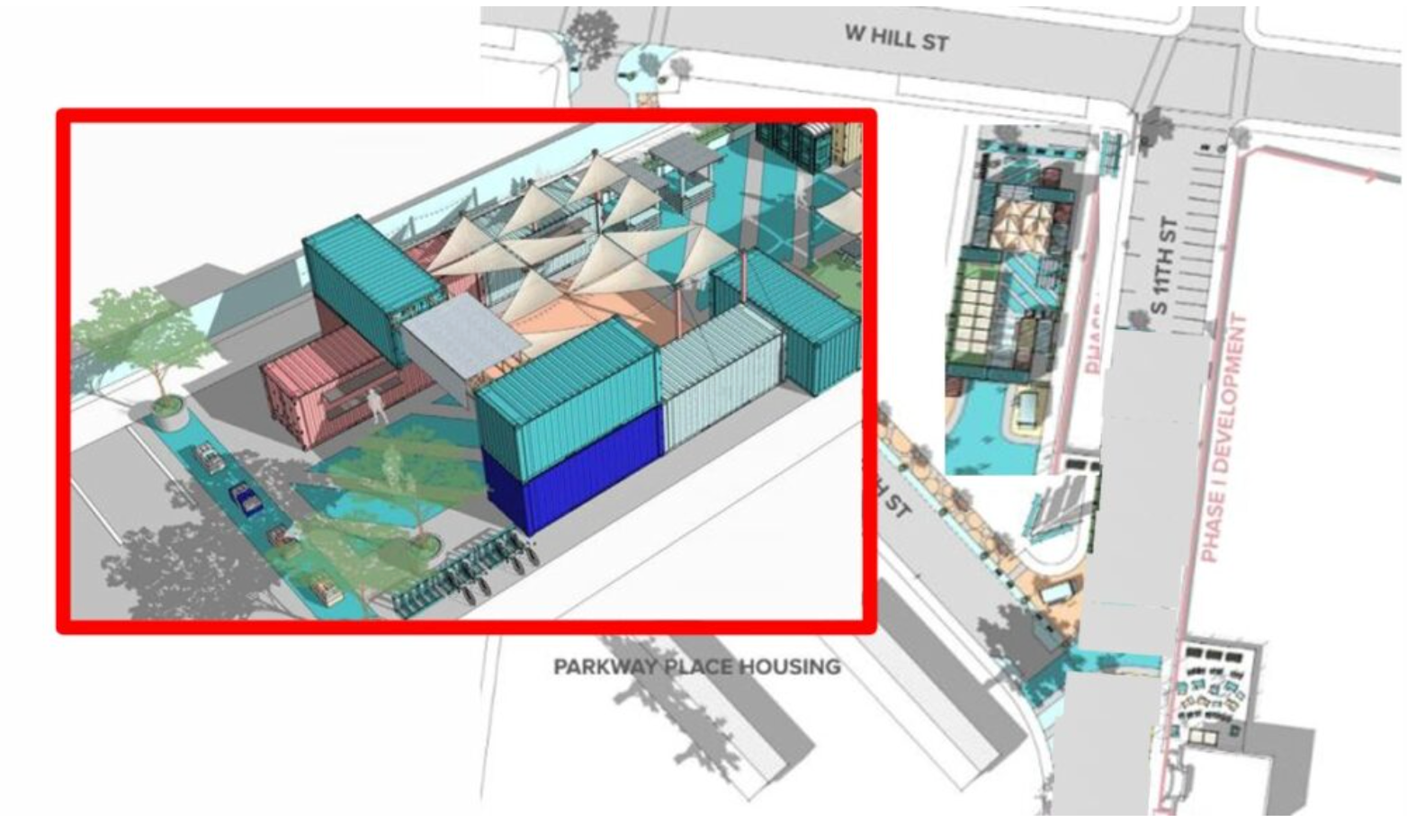
Diagram of a proposed structure made of stacked shipping containers, with surrounding landscaping.
By Center for Neighborhoods • October 24, 2025
Community Foundation of Louisville Delivers Bridge to Community Ownership
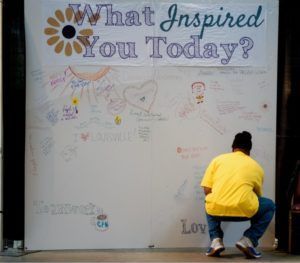
Person writing on a wall with the words
By Center for Neighborhoods • October 18, 2025
Over the years, CFN has helped neighborhoods and corridors tackle real challenges: how to preserve character while welcoming change, how to make streets safer and more connected, how to support local businesses, and how to turn community priorities into plans that can actually be implemented.
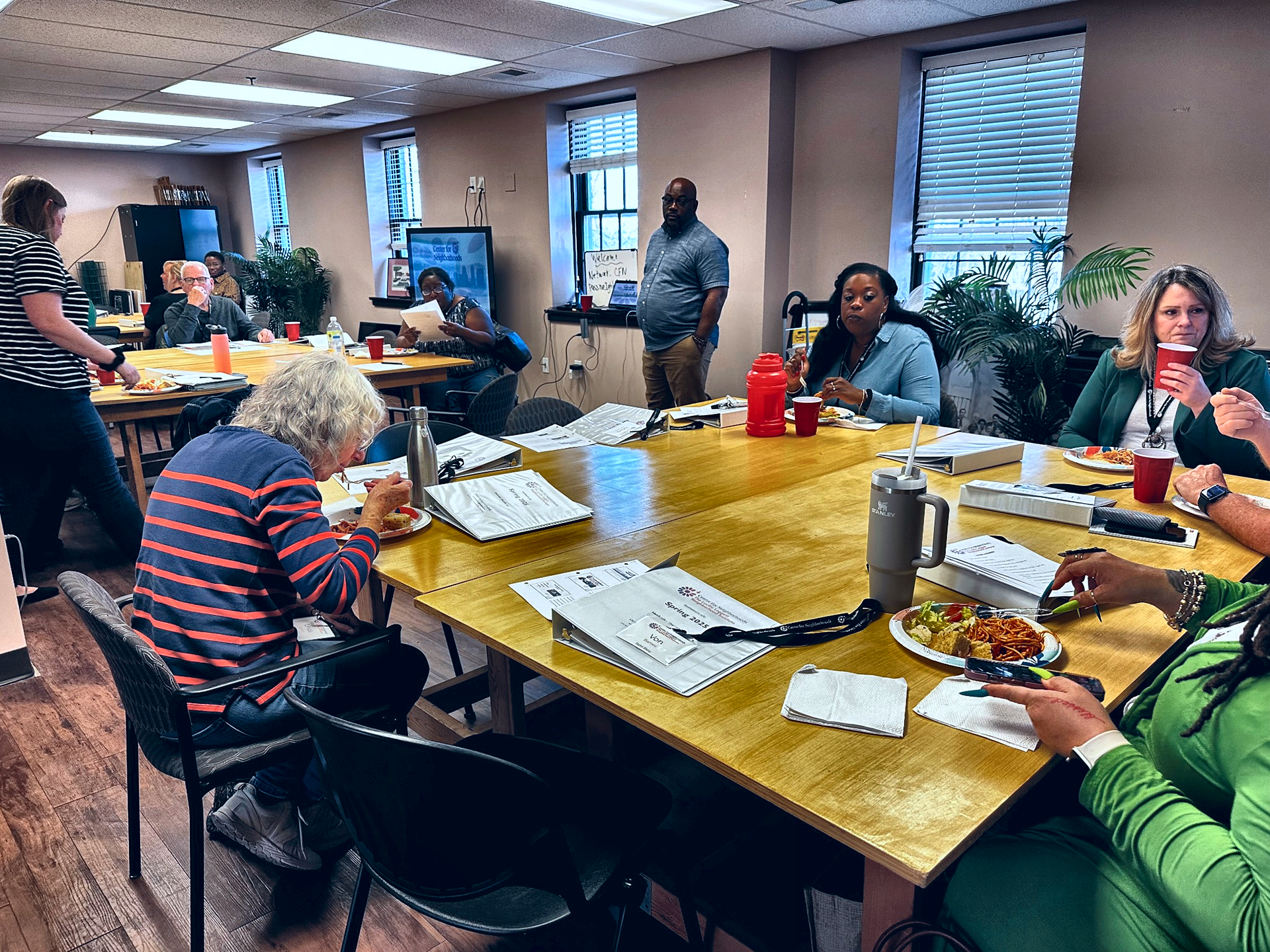
People at a table in a room, eating and working. Several papers and meals visible.
By Center for Neighborhoods • October 15, 2025
Most neighborhoods don’t lack passion. They lack leverage—the know-how to navigate systems, build consensus, and move from frustration to action. CFN’s education work exists to close that gap: we teach people how power works, how neighborhoods organize, and how to turn ideas into outcomes.

Ways to get involved

Every neighborhood’s path is different. Some are just beginning to organize. Others are ready to build, invest, or scale. CFN exists to support all of it without rushing the process or skipping the people.


If you’re ready to engage, learn, plan, or invest in the future of Louisville neighborhoods, we’re ready to walk alongside you.

Engage With Us