Weekly Blog

CFN Updates

May 9, 2025

Proposed Joe Creason Park development: a case study for community engagement
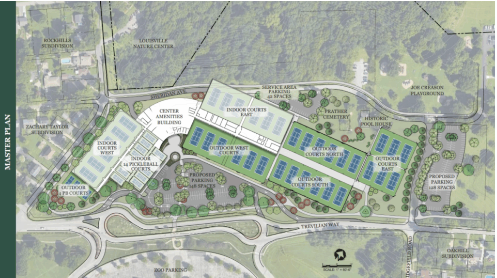
A nonprofit group, the Kentucky Tennis & Pickleball Center, has asked Metro Government to lease roughly 25 acres of Joe Creason Park and help finance a $65 million racket‑sports complex (36 tennis courts, 18 pickleball courts, pro shop, restaurant, fitness areas). The plan includes seeking a $20 million city bond and positioning the facility as Bellarmine University’s future tennis home. (Louisville Public Media)


Supporters call the project an economic and recreational win. Critics—including neighboring residents, the Louisville Nature Center and several council members—worry it would privatize scarce public parkland, worsen traffic, and add light and noise pollution. (Spectrum News 1, WLKY)


This debate reminds us that many high‑impact land, parks and financing decisions happen outside the standard Metro Council agenda‑setting process we’ve been mapping. Leases of city‑owned land, bond authorizations, and Parks capital partnerships often move through mayoral agencies, advisory boards or project‑specific memoranda before (or even without) a formal council vote. 


When the pathway is less transparent, what should the role of resident engagement be?


A “good process” for these off‑agenda items might include:

  • Clear advance notice and open‑door meetings whenever public land is in play.
  • A published decision timeline showing who must sign off—agency directors, boards, the mayor, Metro Council, or bond‑issuing bodies.
  • Independent impact statements (traffic, environmental, equity) posted online in plain English.
  • Multiple feedback channels—public hearings, written comments, and neighborhood‑level briefings—before contracts are finalized.


We are digging into these structures and exploring ways to surface proposals early, explain the approval chain, and equip neighbors to engage constructively. Have thoughts on improving the process? Let us know—community insight drives stronger, more transparent outcomes.


share this
By carlad March 8, 2026
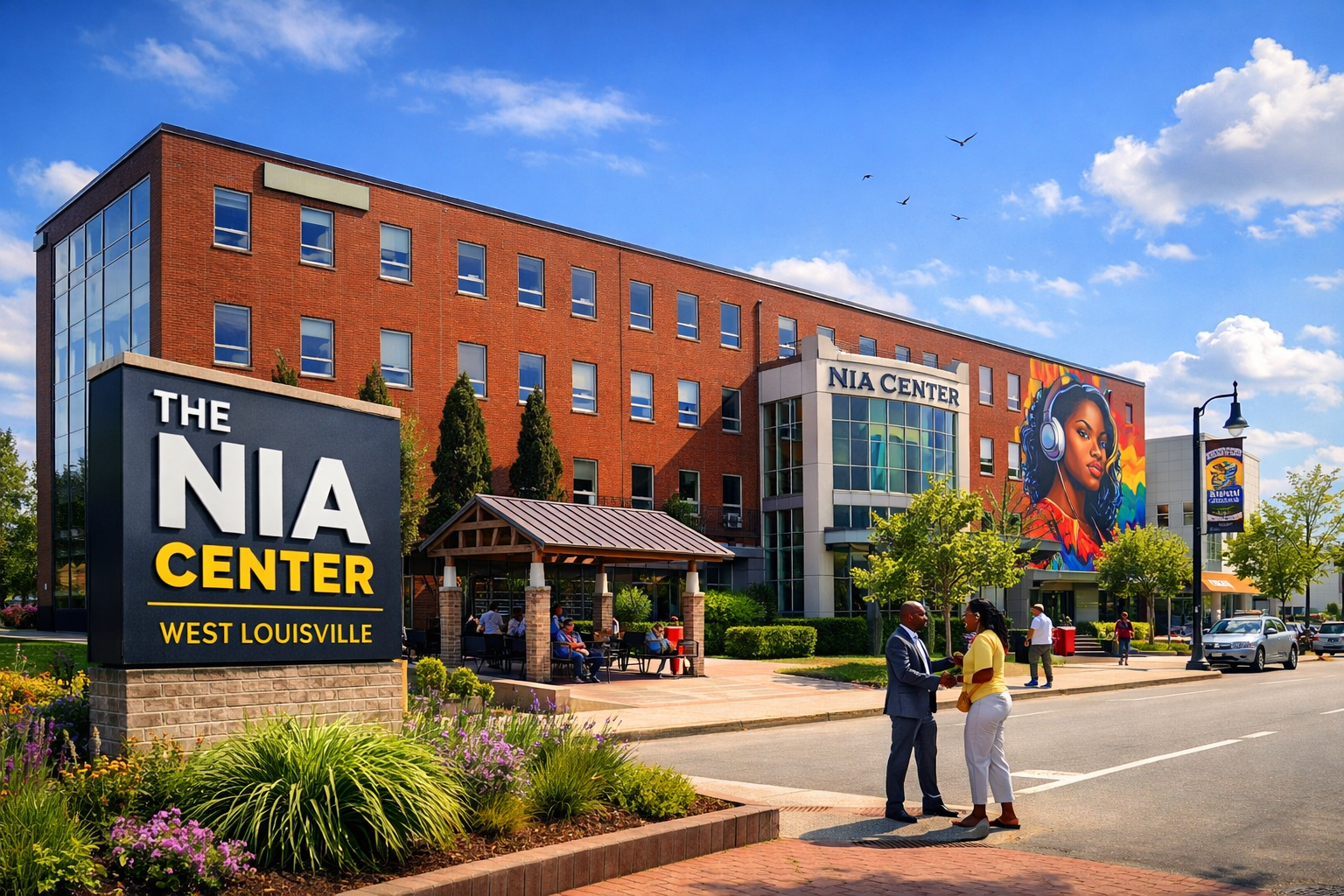
Louisville has a rare opportunity right now: to move a major community asset from uncertainty to permanence. For years, the Nia Center has represented something bigger than square footage: a visible, West End hub where small businesses and community-serving organizations can grow side by side. What makes this moment different is that the work has shifted from “wouldn’t it be great” to the close-ready realities that actually determine outcomes—finalizing deal structure, aligning the capital stack, and putting the documentation in place so the project can close, stabilize, and deliver. As the fiscal sponsor supporting the West Louisville Dream Team, we’re in the process of submitting final materials to a host of potential funders and investors needed to complete the acquisition, including, importantly, a request to the West End Opportunity Partnership (see details below). Funding is the unlock at this point. The overall raise is $4,000,000 to acquire, close, and begin revitalization of the Nia Center. The financing process now runs on dates: proof of financing is due April 3, 2026 , with a targeted closing window in late May / early June 2026 . The request to the West End Opportunity Partnership, in plain terms As part of completing the $4.0 million raise, we, as fiscal sponsor and applicant on behalf of the West Louisville Dream Team (WLDT) and the community ownership offering it is preparing, is requesting $1,950,000 from The Partnership. That request has two parts: $1,500,000 as preferred redeemable equity and $450,000 as a grant for building improvements and upgrades. The $1.5 million earns a 4% annual return with liquidation preference ahead of common equity, meaning it has stronger protection than the common shares that will be held by CFN on behalf of WLDT and the community during the term of the fiscal sponsorship. WLDT/CFN can start paying it back after three years, and if it hasn’t been repaid by ten years, The Partnership can require repayment. There’s no extra penalty for paying it back early. At a future refinance or sale, The Partnership also has an option to convert a portion into up to 5% ownership instead of taking all cash back. If The Partnership prefers, part of this $1.5 million can be structured as a subordinated loan, at interest of 4% and a balloon payment in 15 years. The $450,000 grant goes directly toward the building improvements and upgrades that have been planned for the building to improve the tenant experience and protect long-term value. It also serves as an anchor within a broader $1,000,000 upgrades grant campaign, helping accelerate visible improvements while the building moves into its next chapter. What happens next The next phase is disciplined and time-bound: finish financing commitments, continue tenant engagement and pre-leasing progress, and complete closing preparations so the project can move into early upgrades and stabilized operations. If we do this right, the Nia Center becomes a proof point—showing what it looks like when community leadership and structured capital work together to produce something durable: a stronger hub for Black, Brown and local entrepreneurship, and an ownership pathway that isn’t theoretical, but real enough to close on. This is the Nia Center moment. The work now is to turn community voice and values into execution, and long-term community ownership.
A large ornate bronze fountain with water cascading into a pool, surrounded by a wrought-iron fence and greenery.
By Center for Neighborhoods March 2, 2026
CFN has evolved from a design center doing primarily human-centered architecture work into an organization focused on education, engagement, and resident leadership—training and programs that help neighbors define priorities and build power together.
Woman in blazer at a desk, writing in a notebook, with laptop, blueprints, and phone; office setting.
By Center for Neighborhoods February 21, 2026
Louisville doesn’t need more ideas. It needs more capacity to execute—in neighborhoods, with residents, and in ways that actually last. That’s why Center for Neighborhoods is building a citywide Expert Network of experienced planners, facilitators, designers, organizers, analysts, developers, and project leaders.

Be Part of

the Story

The stories you’re reading are powered by residents building stronger communities. Donate today and support our residents, plans, and partnerships that make community-led change possible.

Make a Donation