
our team

Who we are

THE TEAM BEHIND THE WORK

Facing challenging neighborhood contexts requires an intentional team. We’re thankful to have inspired and committed leaders guiding our center’s efforts.

More About Who We Are

Our Leadership

Co-director and head of programs

Mikal Forbush

Mikal is a native Louisvillian and has been with the Center for Neighborhoods since 2017. He started at the organization as the Senior Neighborhood Liaison, leading the outreach and engagement team. His next role was leading our Educational programs including the Neighborhood Institute and the Neighborhood Summit as well as leading the outreach program. Previously, he was a Senior Program Coordinator with the Muhammad Ali Institute for Peace and Justice at the University of Louisville. He has a background in creating change with youth and community organizations. Mikal is a graduate of the University of Louisville with degrees in Pan-African Studies and Sociology and enjoys many activities within the city.

Contact our Head of Programs
Email:
mikalf@centerforneighborhoods.org

CO-DIRECTOR AND HEAD OF COMMUNITY INVESTMENT

Carla Dearing

Carla joined CFN in July 2024 as Co-Director and Head of Community Investment to lend her experience in strategic planning and managing grants and fiscal sponsorships covering community-driven planning initiatives, and related economic empowerment projects in underinvested communities. Carla started her career at Morgan Stanley & Co. and went on to be a three-time founder, while also serving a ten-year stint in the nonprofit sector as the founding CEO of Community Foundations of America. Carla graduated Phi Beta Kappa from the University of Michigan and she holds an M.B.A. from the University of Chicago. 

Contact our Head of Community Investment
Email:
carlad@centerforneighborhoods.org

Our Board  of Directors

 Every member of our board of directors is a thought leader who has made significant contributions to our communities. Each one brings a unique set of skills and expertise to our organization. 
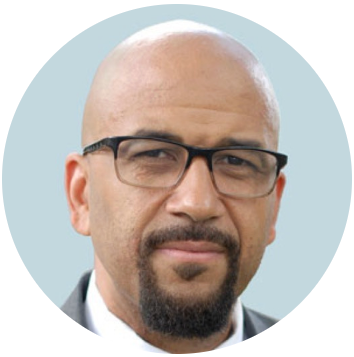
Andre Kimo Stone Guess

President & Chair

President & CEO of Fund for the Arts, a regional arts agency, and the largest funder of the arts in the Greater Louisville regio
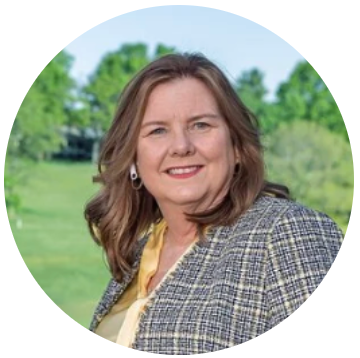
Sheri Radler

Treasurer

Founder, CPA, CMA, CEPA, R Accounting Group LLC, Strategic Controller & CFO Services for Growth-Focused SMEs, Top 50 CAS Firm, 2025 Top 100 ProAdvisor, Intuit Partner Council 
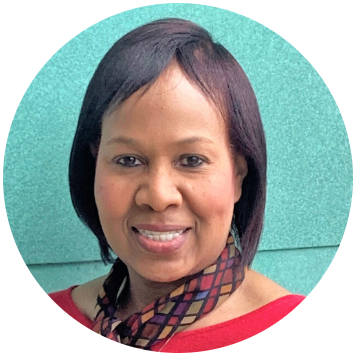
Valecia Quinn

Secretary & Director

Jewish Family & Career Services (JFCS), Director of Navigate. Previously 33+ years in the news publishing industry with Gannett Co., Inc./USA TODAY Network. Serves on the board for Credit Builders Alliance (CBA) and CBA Fund, a Community Impact Cabinet (CIC) member with Metro United Way and AARP Kentucky Community Volunteer.
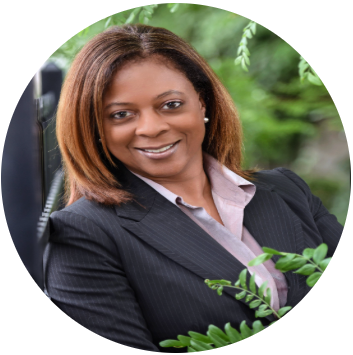
Lawanda Page

Director

Senior Global Community Relations Specialist at Brown-Forman
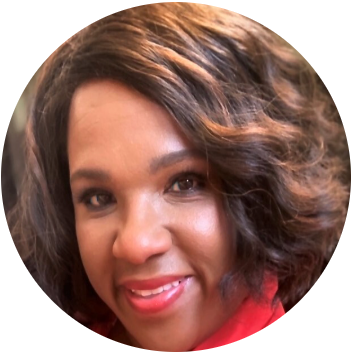
Dr. Terri Davenport

Director

Educator and administrator for over 25 years in Jefferson County Public Schools. Dr. Davenport holds an EdD from the University of Louisville. Proud member of Delta Sigma Theta Sorority, Inc.
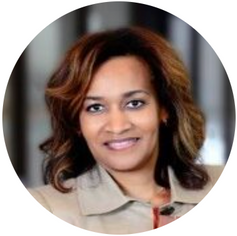
Nicole Fitzpatrick

Director

Community Relations Manager for Louisville Tourism. She has been marketing in Louisville for over 18 years and works in Communications and Marketing on diversity, equity and inclusion, marketing collateral, restaurant stakeholders and dining scene, curating community content, and the Urban Bourbon Trail. 
Jessica Brown

Director

Injury Prevention Manager at UofL Hospital, AICP, MPA. Prior long-time Planning Director at Center for Neighborhoods.
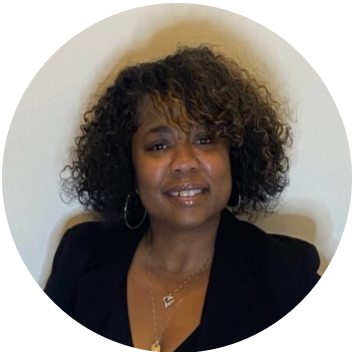
Kennetha Malone

Director

Behavioral Health Therapist, LPCC, Smoketown Family Wellness Center.
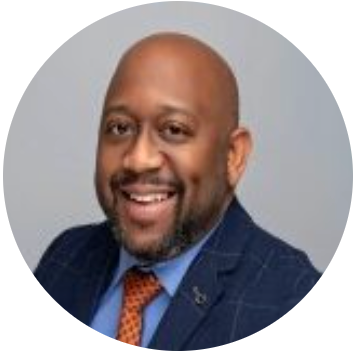
Joshua Watkins

Director

Louisville Metro Director of Strategic Initiatives, as well as a member of the KY House of Representatives, representing the 42 District.

Ways to get involved

Every neighborhood’s path is different. Some are just beginning to organize. Others are ready to build, invest, or scale. CFN exists to support all of it without rushing the process or skipping the people.


If you’re ready to engage, learn, plan, or invest in the future of Louisville neighborhoods, we’re ready to walk alongside you.
Work With Us
By carlad March 8, 2026
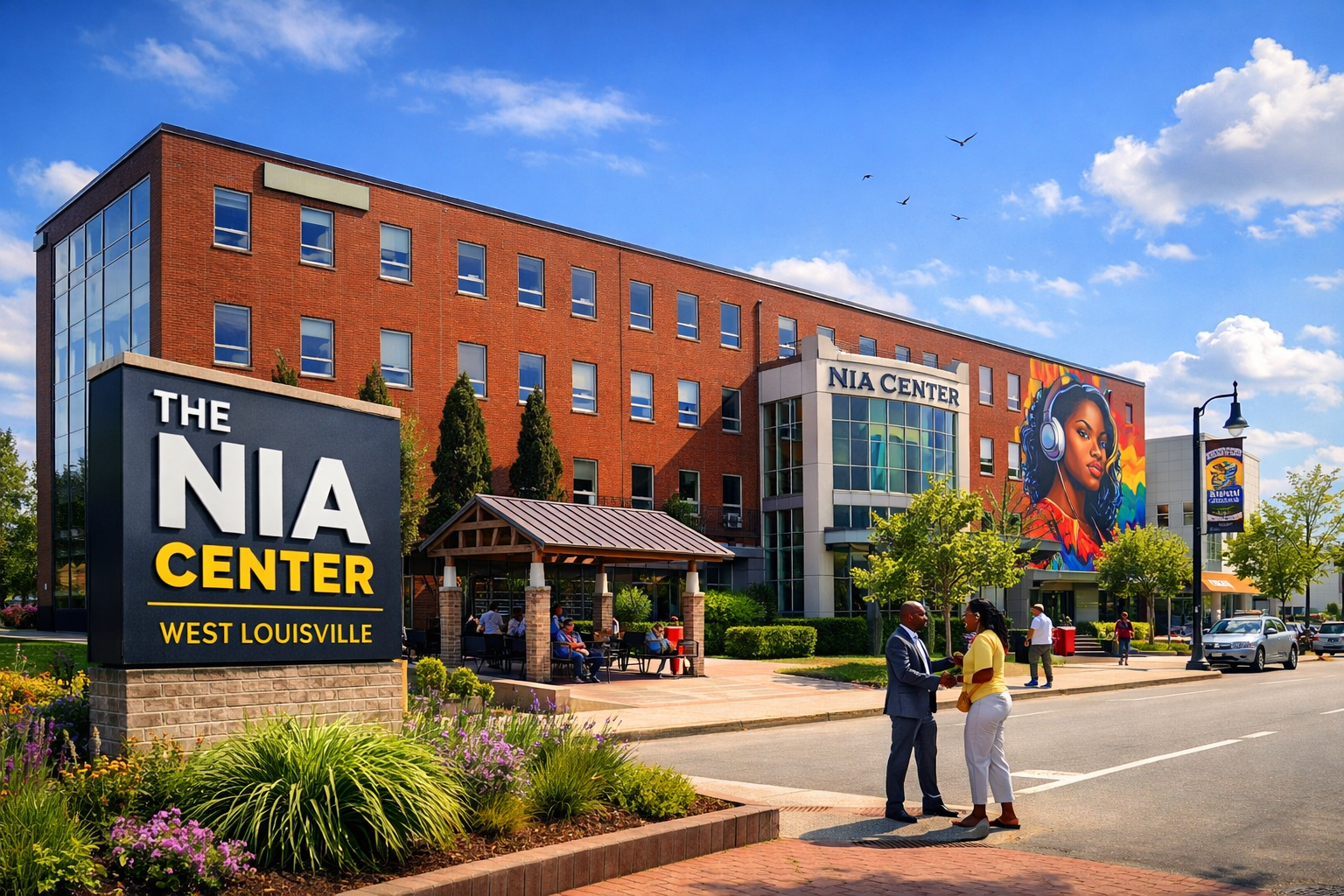
Louisville has a rare opportunity right now: to move a major community asset from uncertainty to permanence. For years, the Nia Center has represented something bigger than square footage: a visible, West End hub where small businesses and community-serving organizations can grow side by side. What makes this moment different is that the work has shifted from “wouldn’t it be great” to the close-ready realities that actually determine outcomes—finalizing deal structure, aligning the capital stack, and putting the documentation in place so the project can close, stabilize, and deliver. As the fiscal sponsor supporting the West Louisville Dream Team, we’re in the process of submitting final materials to a host of potential funders and investors needed to complete the acquisition, including, importantly, a request to the West End Opportunity Partnership (see details below). Funding is the unlock at this point. The overall raise is $4,000,000 to acquire, close, and begin revitalization of the Nia Center. The financing process now runs on dates: proof of financing is due April 3, 2026 , with a targeted closing window in late May / early June 2026 . The request to the West End Opportunity Partnership, in plain terms As part of completing the $4.0 million raise, we, as fiscal sponsor and applicant on behalf of the West Louisville Dream Team (WLDT) and the community ownership offering it is preparing, is requesting $1,950,000 from The Partnership. That request has two parts: $1,500,000 as preferred redeemable equity and $450,000 as a grant for building improvements and upgrades. The $1.5 million earns a 4% annual return with liquidation preference ahead of common equity, meaning it has stronger protection than the common shares that will be held by CFN on behalf of WLDT and the community during the term of the fiscal sponsorship. WLDT/CFN can start paying it back after three years, and if it hasn’t been repaid by ten years, The Partnership can require repayment. There’s no extra penalty for paying it back early. At a future refinance or sale, The Partnership also has an option to convert a portion into up to 5% ownership instead of taking all cash back. If The Partnership prefers, part of this $1.5 million can be structured as a subordinated loan, at interest of 4% and a balloon payment in 15 years. The $450,000 grant goes directly toward the building improvements and upgrades that have been planned for the building to improve the tenant experience and protect long-term value. It also serves as an anchor within a broader $1,000,000 upgrades grant campaign, helping accelerate visible improvements while the building moves into its next chapter. What happens next The next phase is disciplined and time-bound: finish financing commitments, continue tenant engagement and pre-leasing progress, and complete closing preparations so the project can move into early upgrades and stabilized operations. If we do this right, the Nia Center becomes a proof point—showing what it looks like when community leadership and structured capital work together to produce something durable: a stronger hub for Black, Brown and local entrepreneurship, and an ownership pathway that isn’t theoretical, but real enough to close on. This is the Nia Center moment. The work now is to turn community voice and values into execution, and long-term community ownership.
A large ornate bronze fountain with water cascading into a pool, surrounded by a wrought-iron fence and greenery.
By Center for Neighborhoods March 2, 2026
CFN has evolved from a design center doing primarily human-centered architecture work into an organization focused on education, engagement, and resident leadership—training and programs that help neighbors define priorities and build power together.
Woman in blazer at a desk, writing in a notebook, with laptop, blueprints, and phone; office setting.
By Center for Neighborhoods February 21, 2026
Louisville doesn’t need more ideas. It needs more capacity to execute—in neighborhoods, with residents, and in ways that actually last. That’s why Center for Neighborhoods is building a citywide Expert Network of experienced planners, facilitators, designers, organizers, analysts, developers, and project leaders.