
Who We Are
Louisville’s Neighborhood Partner — Bridging people Power and Civic Capacity
The Center for Neighborhoods is a Louisville-based, independent, 501c3 organization that works alongside residents to build the skills, relationships, and collective power neighborhoods need to shape their own futures. For more than 50 years, CFN has helped neighbors navigate complex systems, protect what matters, and turn shared vision into action.
Our work has evolved over time, but it has always been rooted in one belief: lasting neighborhood change begins with people who are equipped to lead it.
Our Origin Story: St. James Court
It Started with a Neighborhood That Refused to Disappear
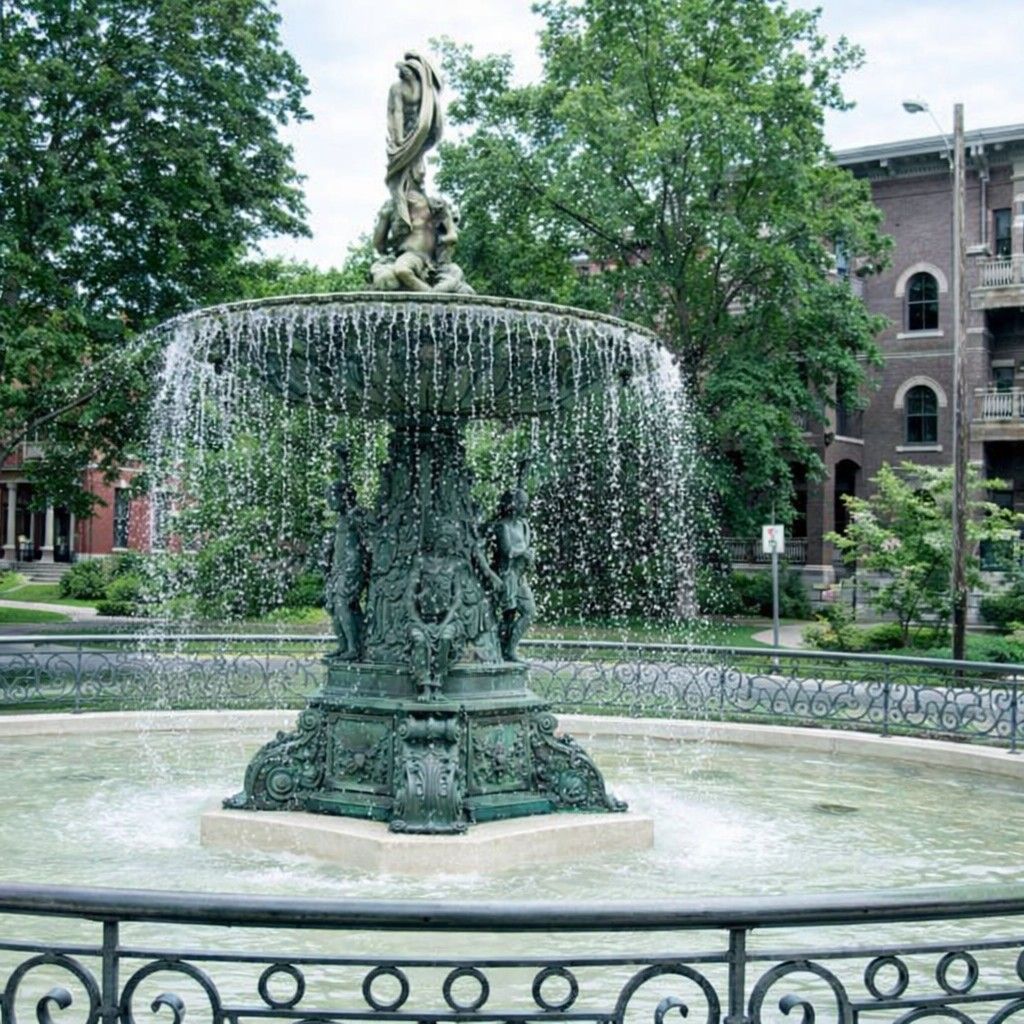
On a quiet evening in Old Louisville, St. James Court doesn’t feel like a district. It feels like a living room for the city: gas lamps glowing, the fountain humming, porches leaning toward the sidewalk as if inviting conversation. Today, it’s one of Louisville’s most recognizable and beloved places.
But this beauty was not inevitable.
By the late 20th century, Old Louisville, like many historic neighborhoods, was still recovering from decades of disinvestment. Large homes were difficult to maintain. Some sat vacant. Others were carved into apartments just to survive. And St. James Court, iconic as it is now, faced the same question every aging neighborhood faces when the market turns away: How do you keep a place alive when demand disappears?
That question—practical, urgent, and deeply human—is where the Center for Neighborhoods began.
The Moment That Created Our “Why”
Where Our Story Began and Why It Still Matters
CFN was founded in 1972 as the Louisville Community Design Center, part of a national movement responding to redlining, urban renewal, and the exclusion of residents from decisions shaping their neighborhoods. The idea was simple and radical for its time: communities deserved professional-grade planning and design support, not decisions made for them from the outside.
In Old Louisville, that meant helping neighbors solve a real problem. Massive historic homes were deteriorating because single-family buyers no longer existed at scale. So CFN and neighborhood partners focused on viability. They evaluated buildings, explored adaptive reuse, and helped chart paths to convert homes into multi-family dwellings keeping roofs intact, utilities on, and people living there.
It was pragmatic work. Architectural work. Survival work. And it helped preserve the physical bones of a neighborhood many cities lost forever.
CFN Origin Story
What Worked and What we learned
The proof still stands. St. James Court remains a walkable, architecturally rich place—an intentional urban environment that continues to attract creativity, culture, and care. The St. James Court Art Show, which began decades ago as part of the neighborhood’s self-rescue, grew into a cultural and economic anchor that reminds Louisville every year what this place is worth.
This was a win. The buildings survived long enough for the neighborhood to become desirable again.
But time revealed a harder truth.
Preserving buildings is not the same as building a complete neighborhood.
Even with historic success, Old Louisville has long struggled with everyday needs like access to groceries and affordable services. And today, as some multi-family conversions are reversed back into single-family homes, a new question emerges: who gets to stay once a place becomes valuable again?
St. James Court taught us something community development had to learn the hard way:
physical change without people power is fragile.
CFN Origin Story
How Our Work has Evolved and Who We Are Today
Over time, we've evolved from a design center focused primarily on buildings into an organization centered on people—their leadership, their relationships, and their ability to act together. Today, CFN works at the intersection of engagement, education, planning, and investment, supporting neighbors not just to imagine change, but to lead it.
Our work is carried out by a team of planners, educators, organizers, designers, and community practitioners who believe neighborhoods are experts in their own lives. We are guided by a Board of Directors deeply connected to Louisville’s civic, nonprofit, and neighborhood ecosystems.
Together, we are committed to a simple but powerful belief:
neighborhoods should have real influence over how their communities are shaped.
At the core: The values that Guide Our Work
Our values are rooted in practice, not theory. They reflect what we’ve learned from decades of working alongside neighbors, especially in communities that have been overlooked, overburdened, or underestimated. These principles shape how we engage, how we design solutions, and how we hold ourselves accountable. They are the throughline connecting where CFN began to how we work today.
01 Asset-Based
Every neighborhood has strengths worth investing in. We believe communities and individuals bring histories, skills, relationships, and local knowledge that form the foundation of lasting change. Our role is to surface, connect, and build upon those assets not replace them.
02 People-Centered
People and relationships are the heart of strong neighborhoods. We center resident voice, lived experience, and collective leadership in our work because sustainable solutions are created with communities, not delivered to them.
03 Place Matters
Design, history, and culture shape how people experience daily life. We believe honoring a neighborhood’s physical and cultural identity strengthens belonging, resilience, and long-term vitality—and should guide how change takes shape.
04 Collaboration
No single organization builds a great neighborhood alone. We work across sectors and alongside residents to connect ideas, partners, and resources—creating impact that is shared, scalable, and rooted in community priorities.
05 Equity
We recognize the lasting effects of disinvestment and structural inequity, and we focus our work—primarily, though not exclusively—in communities that have faced systemic barriers to opportunity. Equity means meeting neighborhoods where they are and investing accordingly.
06 Sustainability
Great neighborhoods are built for the long term. We are committed to approaches that support enduring social, economic, and environmental well-being—strengthening communities today while protecting their future.
07 Integrity
Trust is essential to this work. We hold ourselves to the highest standards of ethics, professionalism, transparency, accountability, and stewardship—because neighborhoods, partners, and funders deserve nothing less.
Thank you to our Community partners




The Story We’re Still Writing
St. James Court proves that neighborhoods can come back. It also reminds us that preservation alone isn’t enough. Without resident power, progress can exclude the very people who made it possible. The Center for Neighborhoods exists so that change doesn’t just happen to neighborhoods, but with them. We’re building the people, plans, and pathways that allow communities to lead again and again.

Ways to get involved
Every neighborhood’s path is different. Some are just beginning to organize. Others are ready to build, invest, or scale. CFN exists to support all of it without rushing the process or skipping the people.
If you’re ready to engage, learn, plan, or invest in the future of Louisville neighborhoods, we’re ready to walk alongside you.
