Weekly Blog

CFN Updates

May 8, 2025

Budget Blueprint: Navigating Louisville Metro’s Fiscal Journey
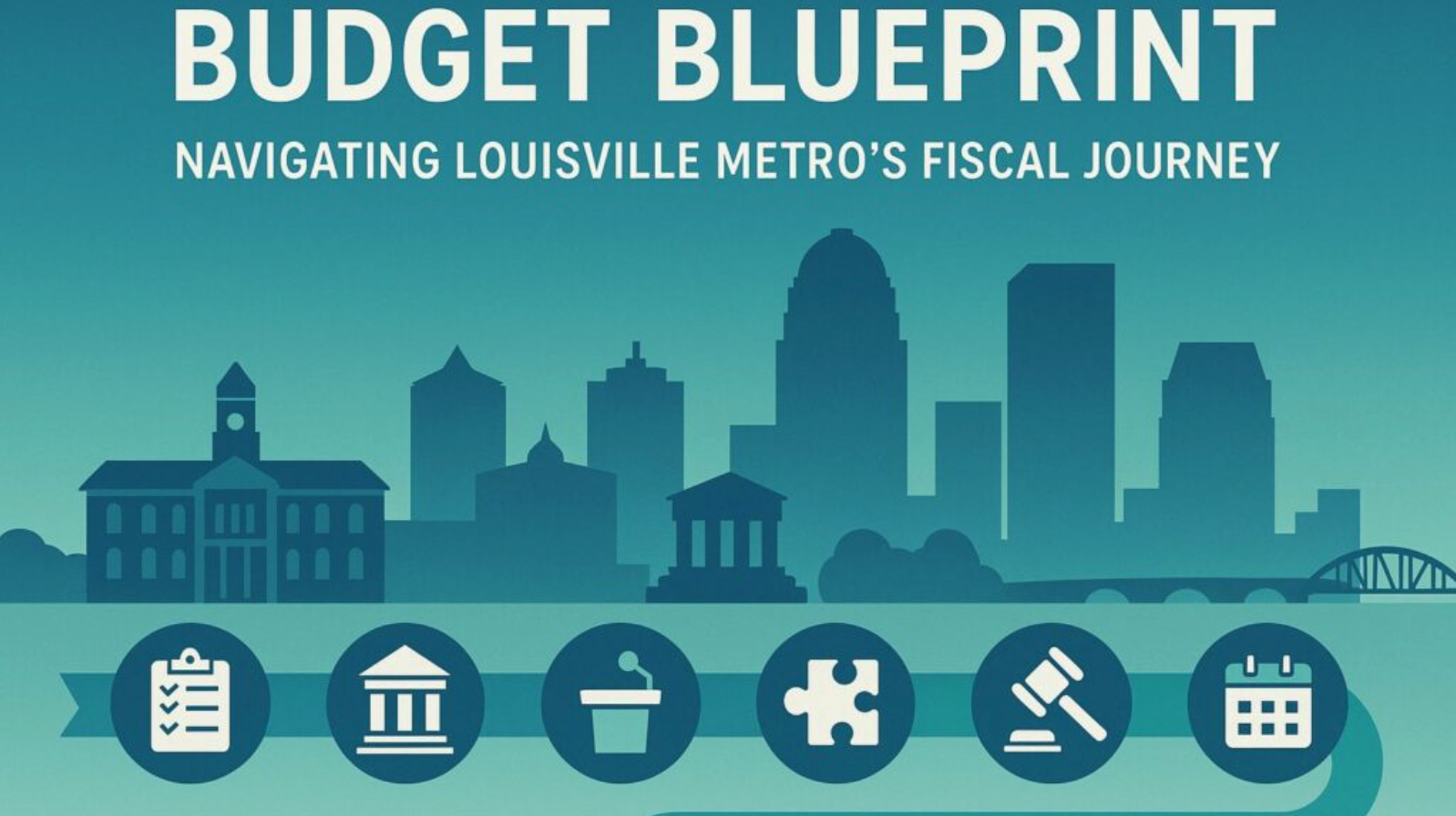
The process for creating and passing a fiscal year budget for Louisville Metro Government involves several key steps, coordinated between the Mayor’s Office, the Office of Management and Budget (OMB), and the Louisville Metro Council. The fiscal year runs from July 1 to June 30. Here’s an overview of the typical process:


1. Departmental Budget Preparation (Fall – Winter)

  • Each Metro department and agency begins internal planning for its budget needs.
  • Departments submit their funding requests to the Office of Management and Budget (OMB).
  • Requests may include new programs, staffing needs, capital projects, or grant needs.

2. Mayor’s Budget Development (Winter – Spring)

  • The Mayor’s Office, with OMB, reviews department requests and revenue projections.
  • Input may be gathered from community meetings or priority surveys.
  • A proposed budget is developed balancing revenue forecasts and spending needs

3. Mayor’s Budget Proposal to Metro Council (Late April – May)

  • The Mayor formally presents the proposed budget to the Metro Council by May 1, as required by law.
  • The budget includes:
  • General Fund allocations
  • Capital improvement projects
  • External agency funding
  • Special revenue and grant funds

4. Metro Council Budget Hearings (May – June)

  • The Metro Council Budget Committee (led by the Budget Chair) holds public hearings and departmental reviews.
  • Council members ask questions about spending priorities, outcomes, equity, vacancies, etc.
  • Community members and organizations may testify about their needs and concerns.

5. Budget Amendments and Deliberations (June)

  • Council members can propose amendments, such as shifting funds, adding language, or restoring cuts.
  • The Budget Committee votes on a final version, incorporating these amendments.
  • Amendments must keep the budget balanced.

6. Final Council Vote (Before June 30)

  • The full Metro Council votes on the final budget—typically during the second or third week of June.
  • The budget must be passed by June 30 to ensure government operations continue without interruption.

7. Implementation (July 1)

  • Once adopted, the budget goes into effect July 1.
  • Departments begin executing programs and projects.
  • The Office of Management and Budget monitors spending throughout the year.

Additional Notes

  • The budget process allows for public input at hearings and through councilmember offices.
  • All documents, including the Executive Budget and Detail Budget, are published online.
  • Mid-year amendments can be passed for budget adjustments or emergencies

Read:         What is Your Identity in Christ?
Watch:    Identity & Action
TAGS:         Black Lives Matter | Martin Luther King Jr. | Race and Ethnicity


LCBC stands for Lives Changed By Christ. We are one church in multiple locations across Pennsylvania. Find the location closest to you or join us for Church Online. We can’t wait to connect with you!

share this
By carlad March 8, 2026
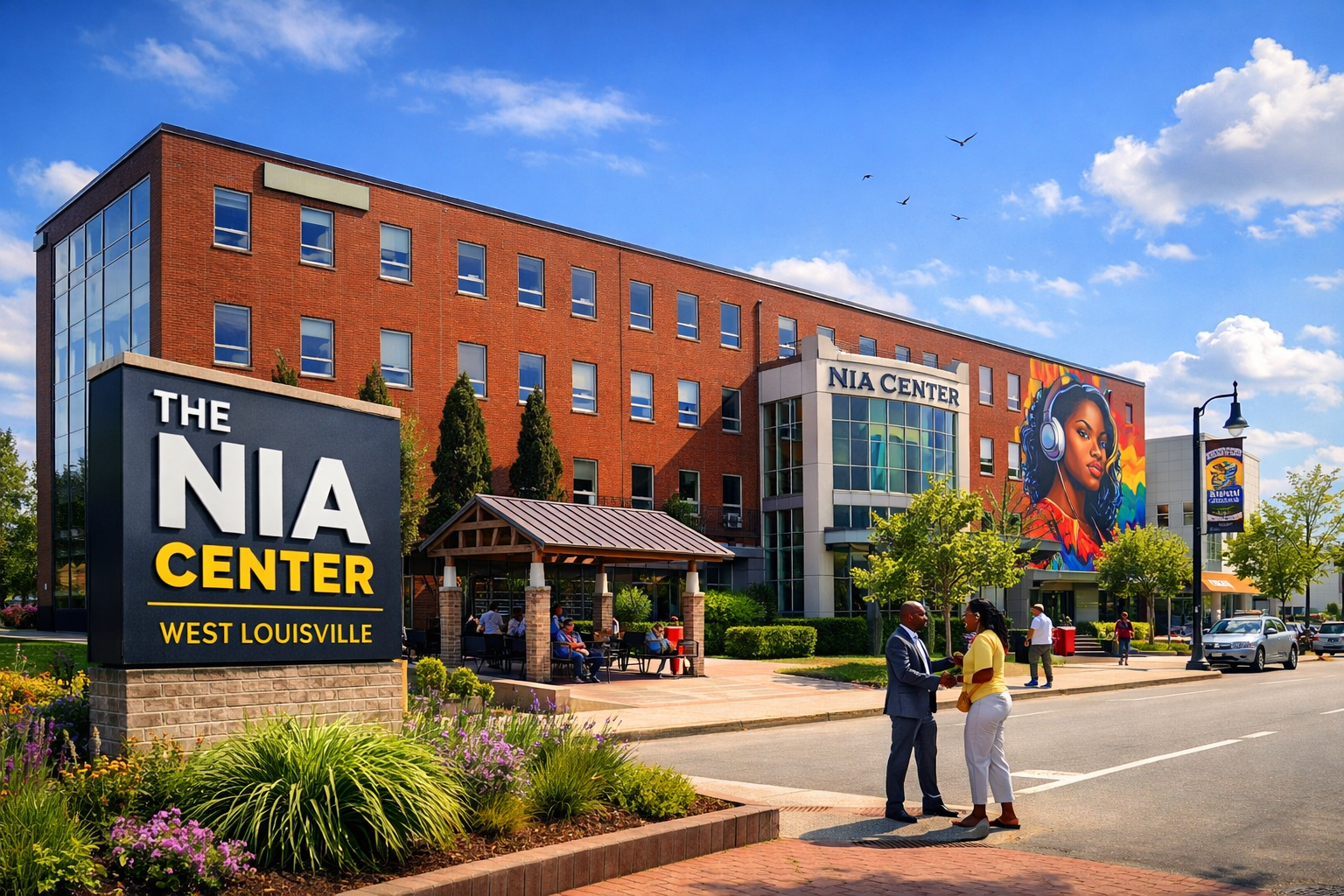
Louisville has a rare opportunity right now: to move a major community asset from uncertainty to permanence. For years, the Nia Center has represented something bigger than square footage: a visible, West End hub where small businesses and community-serving organizations can grow side by side. What makes this moment different is that the work has shifted from “wouldn’t it be great” to the close-ready realities that actually determine outcomes—finalizing deal structure, aligning the capital stack, and putting the documentation in place so the project can close, stabilize, and deliver. As the fiscal sponsor supporting the West Louisville Dream Team, we’re in the process of submitting final materials to a host of potential funders and investors needed to complete the acquisition, including, importantly, a request to the West End Opportunity Partnership (see details below). Funding is the unlock at this point. The overall raise is $4,000,000 to acquire, close, and begin revitalization of the Nia Center. The financing process now runs on dates: proof of financing is due April 3, 2026 , with a targeted closing window in late May / early June 2026 . The request to the West End Opportunity Partnership, in plain terms As part of completing the $4.0 million raise, we, as fiscal sponsor and applicant on behalf of the West Louisville Dream Team (WLDT) and the community ownership offering it is preparing, is requesting $1,950,000 from The Partnership. That request has two parts: $1,500,000 as preferred redeemable equity and $450,000 as a grant for building improvements and upgrades. The $1.5 million earns a 4% annual return with liquidation preference ahead of common equity, meaning it has stronger protection than the common shares that will be held by CFN on behalf of WLDT and the community during the term of the fiscal sponsorship. WLDT/CFN can start paying it back after three years, and if it hasn’t been repaid by ten years, The Partnership can require repayment. There’s no extra penalty for paying it back early. At a future refinance or sale, The Partnership also has an option to convert a portion into up to 5% ownership instead of taking all cash back. If The Partnership prefers, part of this $1.5 million can be structured as a subordinated loan, at interest of 4% and a balloon payment in 15 years. The $450,000 grant goes directly toward the building improvements and upgrades that have been planned for the building to improve the tenant experience and protect long-term value. It also serves as an anchor within a broader $1,000,000 upgrades grant campaign, helping accelerate visible improvements while the building moves into its next chapter. What happens next The next phase is disciplined and time-bound: finish financing commitments, continue tenant engagement and pre-leasing progress, and complete closing preparations so the project can move into early upgrades and stabilized operations. If we do this right, the Nia Center becomes a proof point—showing what it looks like when community leadership and structured capital work together to produce something durable: a stronger hub for Black, Brown and local entrepreneurship, and an ownership pathway that isn’t theoretical, but real enough to close on. This is the Nia Center moment. The work now is to turn community voice and values into execution, and long-term community ownership.
A large ornate bronze fountain with water cascading into a pool, surrounded by a wrought-iron fence and greenery.
By Center for Neighborhoods March 2, 2026
CFN has evolved from a design center doing primarily human-centered architecture work into an organization focused on education, engagement, and resident leadership—training and programs that help neighbors define priorities and build power together.
Woman in blazer at a desk, writing in a notebook, with laptop, blueprints, and phone; office setting.
By Center for Neighborhoods February 21, 2026
Louisville doesn’t need more ideas. It needs more capacity to execute—in neighborhoods, with residents, and in ways that actually last. That’s why Center for Neighborhoods is building a citywide Expert Network of experienced planners, facilitators, designers, organizers, analysts, developers, and project leaders.

Be Part of

the Story

The stories you’re reading are powered by residents building stronger communities. Donate today and support our residents, plans, and partnerships that make community-led change possible.

Make a Donation