
Weekly Blog
CFN Updates
Louisville Is Moving to Nonpartisan Local Elections. Here’s What It Means for Neighborhoods.
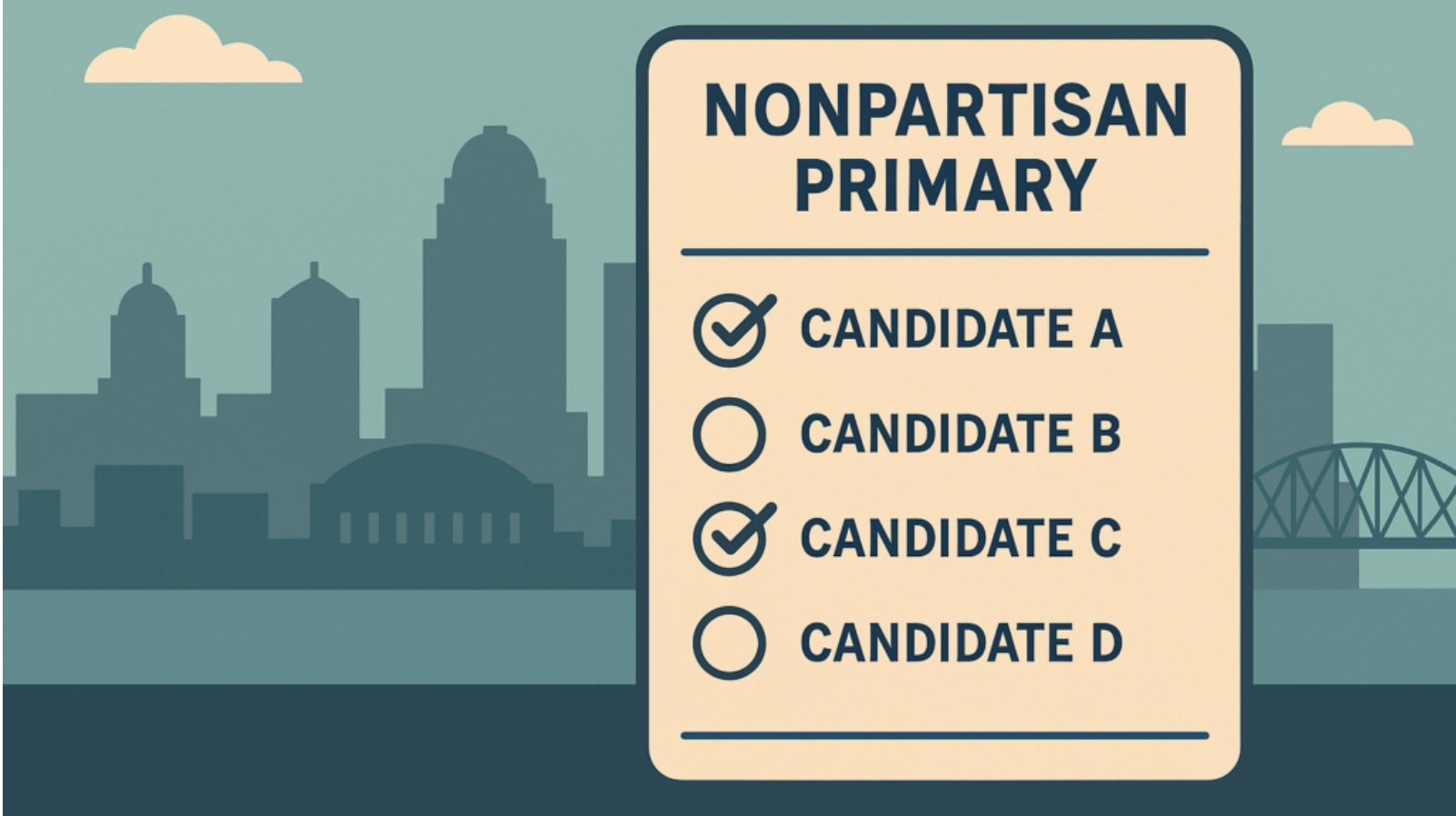
This post is part of our ongoing, experiment-in-public series using AI to speed up analysis of issues affecting the City of Louisville and Metro Council. Kentucky’s House Bill 388 makes Louisville’s mayor and Metro Council elections nonpartisan. The law took effect January 1, 2025; the first ballots without party labels will be in 2026. (Legislative Research Commission).
What Changed
- No party labels on the ballot. Candidates for mayor and Metro Council will appear without “D” or “R.” (Louisville Public Media)
- One combined primary, then a top-two general. All candidates run together in a nonpartisan primary; the top finishers advance to November. (Think “runoff-style,” but on Kentucky’s calendar.) (Louisville Public Media)
- How we got here. Lawmakers passed HB 388 and overrode Gov. Andy Beshear’s veto in April 2024. The statute’s nonpartisan provisions are effective Jan 1, 2025. (WDRB)
- When you’ll feel it. Voters will see the new format in 2026—the next Louisville mayoral election and the next wave of Metro Council races. (Louisville Public Media)
Why it Matters for Neighborhoods
1) You’ll have to know people, not just parties
Without party cues, more voters will evaluate candidates on local plans and track records—street safety, zoning, parks, trash pickup—rather than national labels. That can reward pragmatic problem-solvers (and expose empty branding). (Louisville Public Media)
2) Name ID and ground game just got more valuable
Party shortcuts are gone. That raises the premium on door-knocking, neighborhood forums, local media, and voter education. Well-organized districts may punch above their weight; unorganized ones risk being ignored. (Expect more mailers and digital ads, too.) (Louisville Public Media)
3) Space opens for cross-coalition candidates
Independents and moderates can credibly assemble issue-based coalitions across traditional lines. Party organizations will still matter—through endorsements, fundraising and GOTV—but it’ll be off-ballot. Savvy voters will look beyond the ballot to see who’s backing whom. (Louisville Public Media)
4) More candidates, more fragmentation—so more homework
A bigger field with no labels can be confusing and split votes among similar candidates. Neighborhood groups that provide simple, credible comparisons will materially shape outcomes. (Louisville Public Media)
5) Real possibility of council balance shifting over time
Party majorities aren’t baked in. With new rules and district-level dynamics, competitive seats can flip. That’s leverage for neighborhoods that organize early, show up, and keep score. (Louisville Public Media)
What to watch between now and 2026
- Rule details & timelines. State and local election offices are aligning calendars; the 2026 election schedule is posted (Primary May 19, 2026; General Nov 3, 2026). Track filing windows and forum dates. (Kentucky Secretary of State Elections)
- How many advance from the primary. Current reporting points to a top-two dynamic; watch official guidance as candidate filings open. (Louisville Public Media)
- Behind-the-scenes party play. Endorsements, money, and volunteers won’t vanish—they’ll just be less visible on the ballot. Follow the money and the mail. (Louisville Public Media)
- Local legislative politics. The bill passed with little support from Louisville’s own delegation and over a veto—expect continued debate and, possibly, litigation chatter. (Louisville Public Media)
FAQs we’re already hearing
Does this change when we vote?
No—the calendar stays on Kentucky’s cycle (primary in May, general in November). What changes is how candidates are listed and how they advance. (Kentucky Secretary of State Elections)
Do parties still matter?
Yes, just not on the ballot line. Parties can endorse, fundraise, and mobilize. Voters should look at who’s backing each candidate and why. (Louisville Public Media)
Is this only Louisville?
HB 388 targets consolidated local governments like Louisville Metro; it’s part of a broader package that also touched zoning timelines and other Metro provisions, with key sections effective Jan 1, 2025. (Legislative Research Commission)
The takeaway?
This reform de-labels Louisville’s local elections. It does not de-politicize your daily life. Potholes, zoning, parks, code enforcement, and budget choices are still political—just closer to home. In a nonpartisan system, organized neighborhoods set the agenda. If we do our homework and work together, we can turn this change into better candidates, clearer priorities, and more responsive government.
Sources: Legislative record and effective dates for HB 388; coverage and explainers from Louisville Public Media, Courier-Journal, and WDRB on the veto override and how the new system works; Kentucky’s 2026 election schedule. (Legislative Research Commission)
Read:
What is Your Identity in Christ?
Watch: Identity & Action
TAGS:
Black Lives Matter | Martin Luther King Jr. |
Race and Ethnicity
LCBC stands for Lives Changed By Christ. We are one church in multiple locations across Pennsylvania. Find the location closest to you or join us for Church Online. We can’t wait to connect with you!
share this


Be Part of
the Story
The stories you’re reading are powered by residents building stronger communities. Donate today and support our residents, plans, and partnerships that make community-led change possible.
