Weekly Blog
CFN Updates
Investment Case Study: The Triangle Property — From Harm to Ownership (Park Hill/Algonquin)
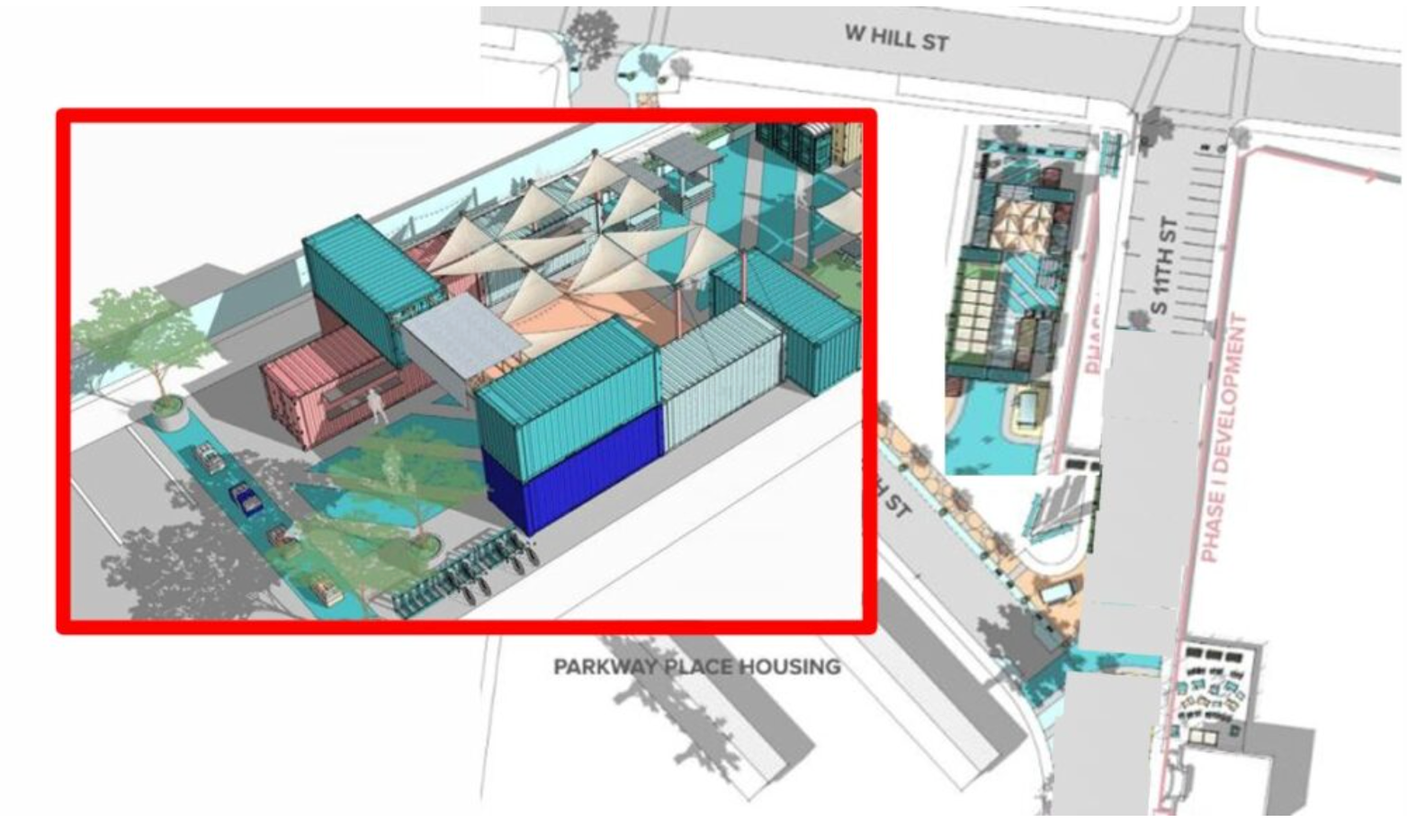
Acquiring the Triangle property was a small but high-leverage move: take a harmful, externally controlled site at the front door of Park Hill/Algonquin and turn it into a community-owned asset that can seed local enterprise, build real wealth, and prove a model that can scale.
CFN closed on the Triangle property at 1120 W. Hill Street on October 21, 2025, holding it on behalf of neighborhood leaders until it transfers into a new resident-led co-op structure.
The problem: “development” that damages the people who live there
In early 2025, residents raised an urgent quality-of-life threat: dumpsters planned just outside the windows of the Parkway Place housing project—another burden on a community already dealing with environmental stressors and the lived impacts of disinvestment. This wasn’t just a land-use fight. It was the familiar pattern: decisions made around a neighborhood, not with it.
The community-led strategy: stop the harm, then buy the ground
Residents—through the Park Hill/Algonquin neighborhood association—did what strong communities do: they organized, identified the issue, and forced it into the open. CFN’s role was to back that leadership with tools the community typically doesn’t have access to quickly: negotiation capacity, deal structure, and a pathway to ownership.
Working together, the group not only persuaded the dumpster company to move, but also pushed for a sale so the community could control what happens next.
The deal: a disciplined acquisition built for transfer to community ownership
CFN negotiated the purchase agreement and closed on schedule. And CFN was explicit about the “why” of the closing:
“This isn’t just a land transaction. It’s the first community-owned foothold at the front door of Park Hill/Algonquin…”
Mechanically, CFN is holding the property until the co-op is fully formed and ready to receive and govern the asset—at which point the Triangle transfers into community ownership through the planned cooperative, Rising Roots Collective. (
Capital stack logic: bridge money + community investment = ownership on time
This acquisition happened because the right kind of capital showed up at the right moment.
- Bridge funding: CFN credits the Community Foundation of Louisville (CFL) with stepping in “at a pivotal moment,” allowing the closing to proceed while longer-cycle project funding is finalized.
- Follow-on package: CFN applied to the West End Opportunity Partnership for a funding package intended to cover not only acquisition, but also holding costs and programming dollars needed to form the co-op and activate the plan. We did not receive the full funds needed, but the $135,000 grant for land acquisition received was enough to allow the effort to move forward.
- Why this matters: This is exactly what modern community investment should do—enable self-determination, not dependency. CFL has described its impact capital approach as providing resources that “enable people to practice self-determination.”
The Triangle deal is the proof point: bridge capital protects timing and price, while community-led governance and longer-term investment protect the outcome.
What CFN “bought,” in plain terms
The Triangle property is a fenced, utility-served parcel with strong frontage and flexible potential uses. A public MLS description characterized it as “just under an acre” with EZ1 zoning, 6-foot chain link fencing, and electrical hookup, positioned for interim uses like storage/parking/light industrial—plus billboard lease income potential.
CFN’s point wasn’t to preserve its prior use. The point was to convert it from an outside-controlled nuisance into a community-controlled platform.
Activation plan: “make it useful and alive”
CFN is tying the site to a near-term activation approach (“Economic Village”)—a visible, practical launch that starts small, proves demand, and builds confidence while the co-op formation and full funding package finalize.
CFN describes what ownership unlocks:
- space for small Black-owned businesses and makers,
- neighbors governing the asset and sharing benefits,
- early activation that draws partners, training, and jobs into the neighborhood.
Governance: ownership with standards, not vibes
CFN’s messaging is clear: community ownership is the goal, and it must be paired with disciplined execution. The Triangle post sets a standard for what comes next—transparent governance, disciplined finances, and visible outcomes that residents can see on their blocks. This is where CFN’s model shows its edge: it doesn’t stop at “engagement.” It builds the infrastructure for ownership.
What success looks like
CFN will measure this like an investment, not a feel-good story:
- Ownership transfer completed to the co-op (legal formation + onboarding done).
- Capital deployed and recycled (bridge repaid; long-term funds secured).
- Site activated early (programming + micro-retail/workforce uses launched).
- Local enterprise outcomes (new businesses launched, jobs created, earned revenue).
- Neighborhood control becomes normal (a replicable playbook other neighborhoods can follow).
Why this is a new model worth copying
Traditional neighborhood “investment” often starts with outside actors buying land early and residents paying the cost later. CFN is pushing the opposite sequence:
Residents lead → CFN structures → partners fund → community owns → value stays local.
Or, as the West End Opportunity Partnership frames its mission: a system designed to keep investment in the West End and support community development in a way that benefits residents and local businesses. (West End Opportunity Zone)
The Triangle is a small parcel with a big message: when community leads and capital follows, neighborhoods stop being acted upon—and start building wealth on their own terms.
share this

Be Part of
the Story
The stories you’re reading are powered by residents building stronger communities. Donate today and support our residents, plans, and partnerships that make community-led change possible.
