
news & Insights
Your Neighborhood Is on the Ballot
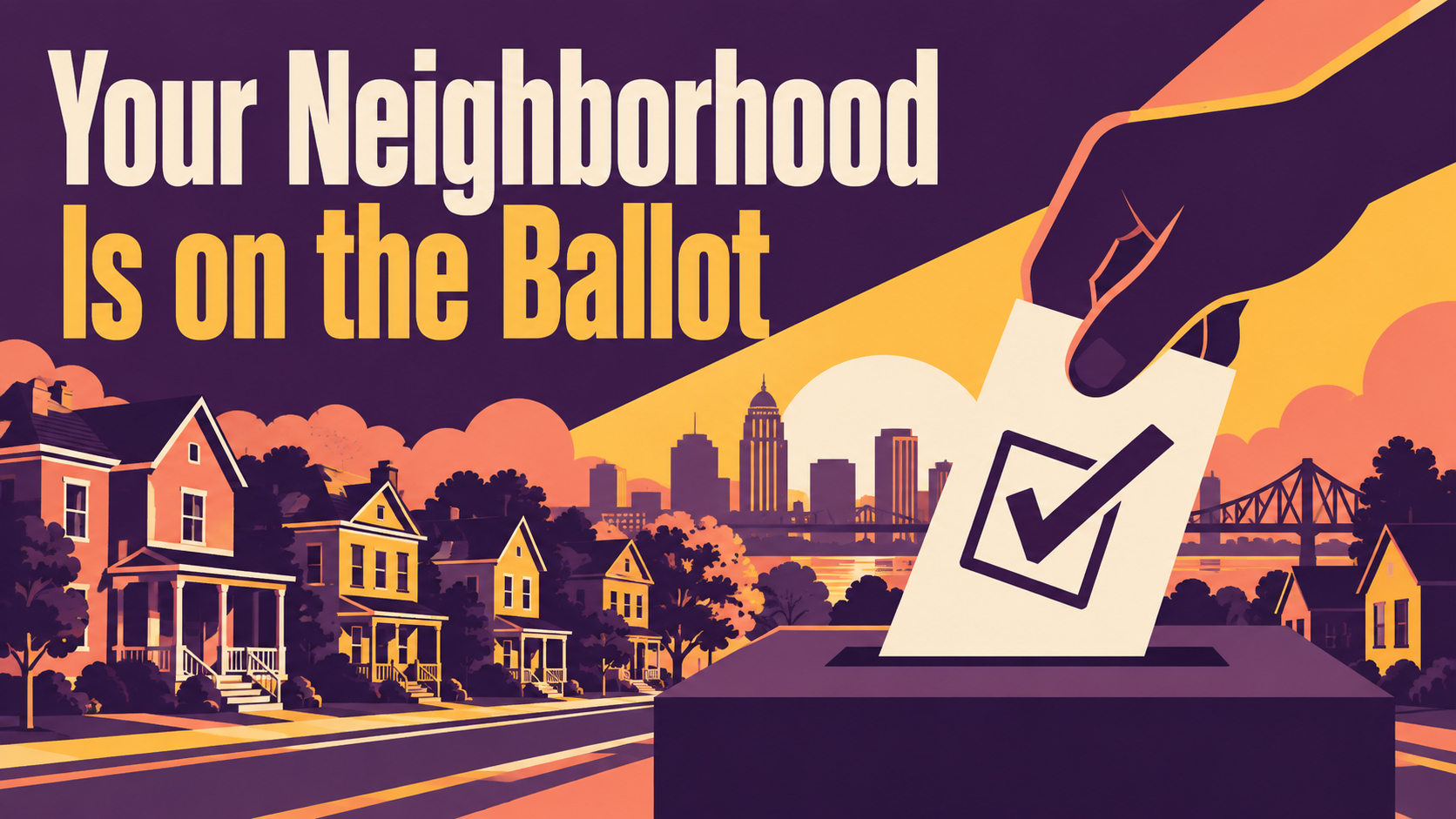
In 2024, the Kentucky General Assembly passed House Bill 8. Most Kentuckians never heard of it.
The bill eliminated the state's 6 percent sales and use tax for approved data center projects, meaning companies that qualify don't pay that tax when they buy, lease, install, repair, or replace data center equipment in “consolidated local governments” with at least 500,000 residents (Jefferson County). Then in 2025, Kentucky House Bill 775 expanded that to the entire state. The tax is not deferred and not credited back later, it simply isn't collected. If you had the right certificate, the tax bill was zero.
To qualify, a company had to commit to a minimum capital investment of $450 million. That bar is high enough to exclude small businesses but low enough for the largest technology companies in the world.
The legislators who passed this bill were elected in races where turnout regularly falls below 20 percent in primary elections. Most of the constituents affected by the decision had no idea the vote was happening.
This is how the future of your community gets shaped without you in the room.
Kentucky normally collects 6 percent on the sale, purchase, lease, use, storage, consumption, installation, repair, and replacement of equipment. For data centers that meet the investment threshold, that revenue disappears before it ever reaches the state general fund, which pays for schools, roads, public health, and the local services that neighborhoods actually depend on.
The companies that benefit from this exemption are not small. They are among the most profitable businesses on earth, and they received this exemption because the people who voted for it were not seriously worried about the voters who would bear the cost.
That's not an accident. Legislative districts in Kentucky are drawn by the legislators who occupy them. Primary turnout in state house races across the commonwealth regularly falls below 15 percent.
The people who show up to those primaries are not a representative cross-section of any neighborhood in Louisville, and the officials they elect know it. When a vote like HB 8 ort HB 775 comes up, the calculation is straightforward: the companies lobbying for the exemption are organized, present, and paying attention. Most residents are not. The bill passes.
The connection to your neighborhood is direct. Every dollar exempted under HB 8 is a dollar the state doesn't have for the programs and infrastructure that localities depend on. West Louisville residents who want better transit, safer streets, or fully funded schools are competing for a pie that just got smaller, not because of scarcity, but because the legislature voted to give a portion of it away.
That vote was cast by people your neighbors elected, in races your neighbors mostly didn't vote in.
In communities where residents are organized, where people track how their state and local representatives votes and then show up to primary and general elections with that information in hand, the calculation changes.
Legislators who quietly hand tax exemptions to corporations while their districts go without start to face real consequences. That accountability doesn't come from outrage after the fact. It comes from people who knew the vote was happening, knew who cast it, and showed up the next time the seat was on the ballot.
Your neighborhood is shaped at every level of government, from Metro Council zoning hearings to Frankfort committee rooms where bills like HB 8 get their first vote. The officials making those decisions are counting on most residents not paying attention.
What changes when you do?
share this
Be Part of
the Story
The stories you’re reading are powered by residents building stronger communities. Donate today and support our residents, plans, and partnerships that make community-led change possible.