
news & Insights
Community Ownership Is Not a Slogan. It Is a Capital Stack.
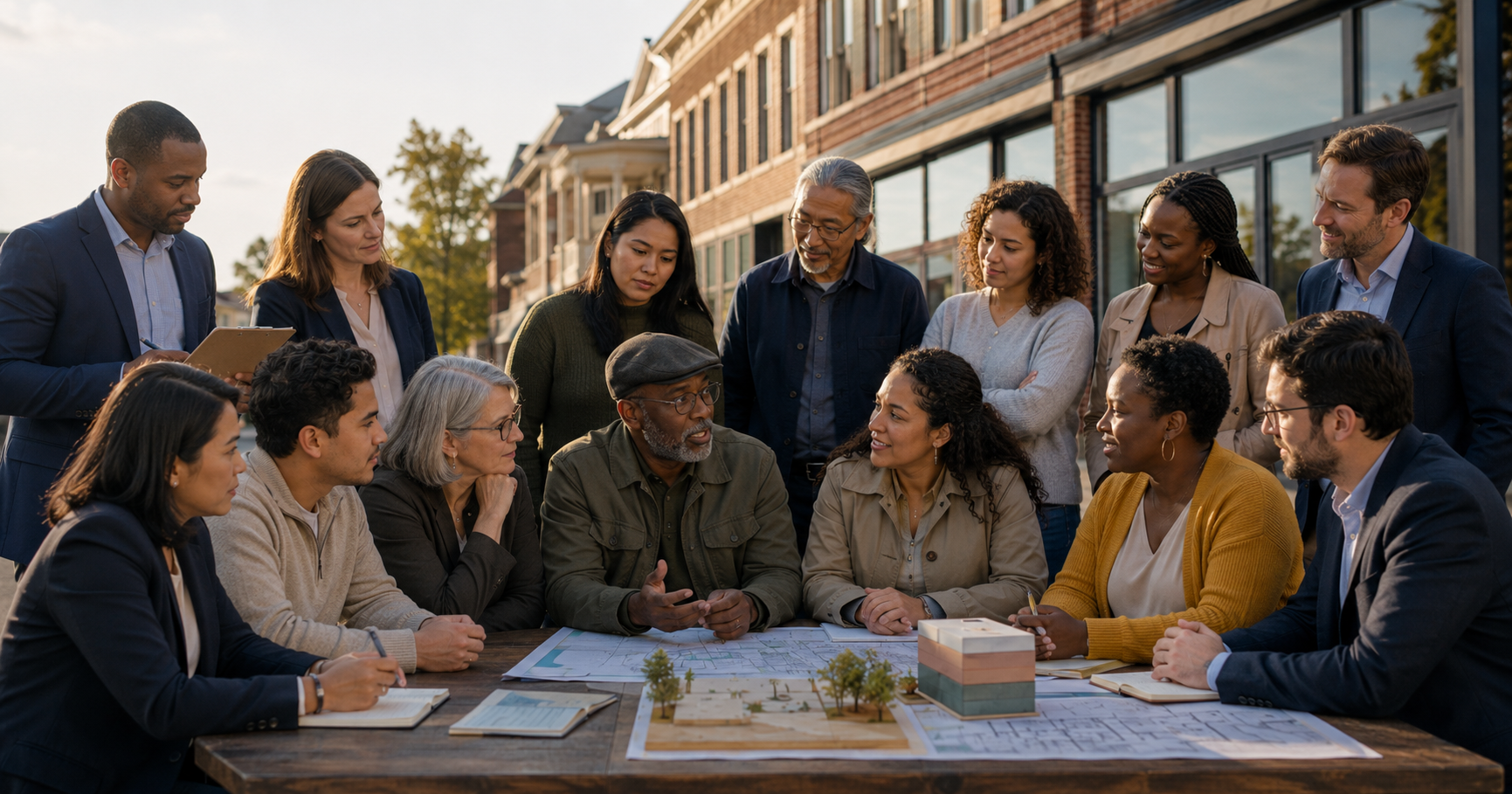
Community ownership is easy to celebrate and hard to build.
At Center for Neighborhoods, we believe deeply in neighbors shaping the future of the places they call home. That belief has guided our work for more than 50 years — through leadership training, neighborhood planning, civic engagement, fiscal sponsorship, and community investment.
But belief alone does not buy a building. It does not close a financing gap. It does not create working capital, satisfy lenders, complete renovations, or protect a community-serving asset long enough for it to become stable.
That is the real work of community ownership.
For communities that begin without land, cash, collateral, or inherited assets, ownership requires more than vision. It requires a carefully assembled set of capital sources designed to do what conventional finance often cannot: carry risk, protect community control, and give a project enough time to become what the community knows it can be.
The Nia Center Acquisition and Revitalization effort offers one live example of that work.
The Nia Center is more than a building on West Broadway. It is a landmark of possibility — a place originally created to support entrepreneurship, workforce opportunity, transit access, civic gathering, and neighborhood advancement. The current effort seeks to bring that promise back to life by acquiring the building, making needed improvements, rebuilding occupancy, welcoming community-serving tenants, and creating a pathway for long-term community ownership.
But the most important lesson we are learning may be this: community ownership does not happen because people want it badly enough. It happens when community vision is matched with the right financial structure.
That means grants that address deferred maintenance and future infrastructure needs. It means patient loans that give the project time to stabilize. It means mission-aligned equity that brings capital without taking community control. It means public, philanthropic, private, and civic partners understanding that the return is not only financial — it is also measured in local businesses strengthened, community-serving tenants retained, wealth-building opportunities created, and neighborhoods gaining more control over their future.
This is exactly why CFN’s work is organized around a simple but powerful progression: Engagement → Education → Planning → Investment. Engagement makes sure the work begins with people. Education helps communities understand the systems, choices, risks, and opportunities in front of them. Planning turns vision into strategy. Investment turns strategy into reality.
When any one of those pieces is missing, community ownership becomes fragile. Engagement without investment becomes frustration. Planning without capital becomes another report. Investment without community governance can become extraction with better language.
The Nia Center moment asks Louisville to do something harder and more hopeful: to align capital, civic will, public leadership, tenant commitment, and community vision around a shared future.
If we get this right, we do more than save a building. We demonstrate a new way to build community wealth, protect neighborhood assets, and make sure that revitalization does not simply happen to communities, but with them and for them.
We invite you to read the full thought piece below.
Download the full thought piece: LINK
Blog picture is AI-generated.
share this
Be Part of
the Story
The stories you’re reading are powered by residents building stronger communities. Donate today and support our residents, plans, and partnerships that make community-led change possible.